
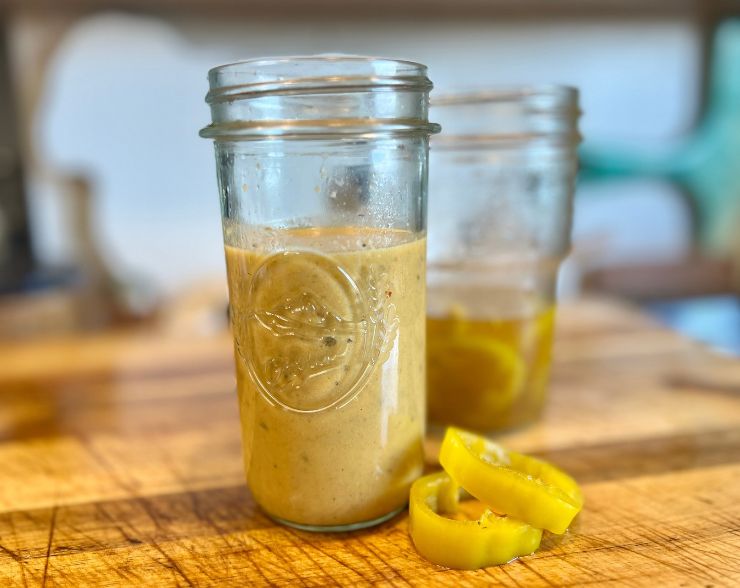
Pickled Banana Pepper Marinade

This bold and tangy pickled banana pepper marinade is made with banana peppers, their flavorful brine, olive oil, garlic, Dijon mustard, and a touch of honey. Use it to marinate steak, chicken, or pork—or serve it as a salad dressing, pasta salad dressing, or drizzle for grilled vegetables.
Ingredients
- 1/2 cup pickled banana peppers
- 1/2 cup banana pepper brine, strained
- 2 cloves garlic smashed
- 1 tbsp Dijon mustard
- 1 tbsp honey
- 1 tsp dried oregano
- 1 tsp onion powder
- 1/2 tsp sweet paprika
- 1/2 tsp freshed cracked pepper
- 1/4 tsp crushed red pepper, optional
- 1/3 cup extra-virgin olive oil
Instructions
- If the banana pepper brine contains a large amount of mustard seeds, peppercorns, or other pickling spices, pour it through a fine-mesh strainer before measuring. A few spices are fine, but straining out an excessive amount prevents them from overpowering the finished marinade.Add the banana peppers, strained brine, garlic, Dijon mustard, honey, oregano, onion powder, sweet paprika, black pepper, and crushed red pepper to a tall blending cup or wide-mouth mason jar if using an immersion blender. You can also prepare the marinade in a countertop blender or food processor.Blend the ingredients without the olive oil until the banana peppers and garlic are finely processed and the mixture is nearly smooth.With the blender or food processor running, slowly drizzle in the olive oil. When using an immersion blender, pour the oil slowly down the inside of the blending cup or jar while keeping the motor running. Continue blending until the oil is fully incorporated and the marinade looks creamy and emulsified.To use as a marinade, place the meat in a shallow dish or resealable bag and add enough marinade to coat it thoroughly. Turn the meat to distribute the marinade evenly, then cover and refrigerate for the recommended amount of time.Remove the meat from the marinade and allow the excess to drip off. Pat the surface lightly with a paper towel before cooking to promote browning and prevent the meat from steaming. Discard any marinade that has come into contact with raw meat.
Recommended marinating times:
- For steak, marinate for 2–4 hours.For chicken, marinate for 4–8 hours.For pork, marinate for 4–8 hours.For vegetables, marinate for 30–60 minutes.
Other Ways to Use It
- Use it as a dressing for pasta salad.Serve it as a bold dressing for a green salad. For a milder salad dressing, blend or whisk in additional olive oil to taste.Toss it with grilled or roasted vegetables.Use it to dress a grain bowl or cold rice salad.Drizzle it over sandwiches, wraps, grilled meats, or roasted potatoes.Use it as a tangy dressing for potato salad or coleslaw.
Storage
- Store unused marinade that has not come into contact with raw meat in a clean, airtight container in the refrigerator for up to 2–3 weeks. Shake or stir well before using, as some separation is natural.Always discard marinade that has been in contact with raw meat.
Notes
- Use mild or hot pickled banana peppers depending on your preferred level of heat. This recipe was developed and tested with mild banana peppers. For the best flavor, use the peppers and brine from the same jar.
Tried this recipe?Let us know how it was!