
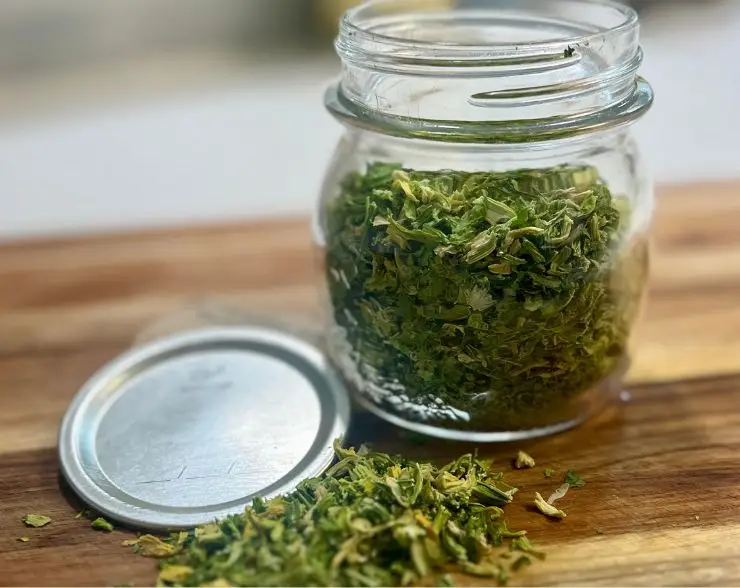
Dried Celery Flakes
Dried celery is one of the most under-appreciated ingredients in the kitchen.
Most people don’t think to look for it, and when they do, it’s often hard to find. When it is available at the grocery store, it’s usually dull, woody, and lacking the fresh, savory character celery is supposed to bring.
That’s a shame, because properly dried celery is incredibly useful. It adds depth without bulk, supports other flavors without overpowering them, and shows up in more dishes than you’d expect once you start using it intentionally.
This is one of those ingredients that earns its place quietly, but consistently.
Why Dried Celery Deserves More Attention
Fresh celery does a lot of background work in cooking, but dried celery does something different.
It concentrates the flavor without adding moisture or texture. That makes it especially valuable in:
Soups and stews
Stocks and broths
Seasoning blends
Dry rubs
Savory baked goods
Once you have a good jar on hand, you’ll start reaching for it where fresh celery wouldn’t make sense.
Store-Bought vs Homemade
This is where homemade really matters.
Most store-bought dried celery:
Is made from thick, poorly dried stalks
Skips the leaves entirely
Ends up woody instead of aromatic
When you dry celery yourself, you control the cut, the drying temperature, and the final texture. You also get to include the leaves, which are where a lot of the flavor lives.
The difference isn’t subtle.
Use the Leaves, They Matter
Celery leaves are not scraps.
They’re more concentrated than the stalks and slightly herbal. When dried, they bring a savory depth that blends beautifully into soups, stocks, and seasoning mixes.
You can dry stalks, leaves, or both. I prefer a mix, just know the leaves will finish faster and should be checked early.
Preparing Celery for Drying
Wash the celery thoroughly, especially near the base. Separate stalks from leaves and dry everything well before slicing.
Slice the stalks thinly so they dry evenly. Leaves can be left whole or roughly chopped.
Uniform size matters more than perfection.
Drying the Celery
Dehydrator Method
This is the most consistent option.
Set the dehydrator to 125–135°F. Arrange the celery in a single layer. Silicone mats are especially helpful here because celery leaves shrink quickly and fall through trays.
Dry for 6–10 hours, checking periodically. Remove pieces as they finish.
Celery is done when it snaps cleanly and feels brittle, not leathery.
Oven Method
The oven works if needed.
Set it to the lowest temperature possible and prop the door open slightly to let moisture escape. Turn and check often.
This method works, but expect longer drying times and some color loss.
Turning It Into Flakes
Once fully dried, let the celery cool completely.
Crush by hand for rustic flakes or pulse briefly in a grinder. Avoid turning it into powder unless that’s what you want.
Flakes give you more control and more uses.
Storage Matters More Than You Think
Dried celery readily absorbs moisture from the air.
Once cooled:
Store in a clean glass jar
Add one small food-safe clay desiccant pack
Vacuum seal the jar if storing long-term
These steps help prevent clumping, protect flavor, and keep the flakes free-flowing, especially in humid kitchens.
How I Use Dried Celery Flakes
This is a background ingredient that quietly improves food.
Soups and stews
Homemade stock
Pot roast and beef stew seasoning
Dry rubs
Celery salt
Crackers and savory baking
Rice and grain dishes
Anywhere celery flavor matters more than texture.
Storage and Shelf Life
Stored properly, dried celery flakes will keep for about a year, often longer.
If the aroma fades or the flakes become woody or clumpy, it’s time to make a fresh batch.
Dried Celery Flakes
Equipment
Ingredients
- Fresh celery stalks
- Fresh celery leaves
Instructions
- Wash celery thoroughly and dry wellSeparate stalks from leavesSlice stalks thinly, thick pieces dry woody
Dehydrator Method
- 4. Arrange stalks in a single layer on dehydrator trays5. Arrange leaves on a separate tray, using a silicone mat if you have one to prevent pieces from falling through6. Dry at 125–135°F for 6–10 hoursLeaves will finish first, remove as soon as brittleStalks are done when they snap cleanly and feel fully dry
Oven Method
- 4. Arrange stalks and leaves in a single layer on parchment-lined baking sheets5. Set oven to the lowest temperature possible6. Prop the door open slightly to allow moisture to escape7. Turn pieces occasionally and remove as they become fully dryLeaves will finish before stalks
Finish
- 7. Let all celery cool completely8. Crush into flakes using one of the following methodsRub between clean hands for rustic flakesPlace in a zip-top bag and crush with a rolling pinPulse briefly in a spice grinder or blender, avoid powderCombine stalks and leaves and store in an airtight glass jar
Storage Tip
- For longer storage, add one small food-safe clay desiccant pack and vacuum seal the jar if desired.
Notes
- Leaves dry faster than stalks, check earlyDo not store until fully cooled
