
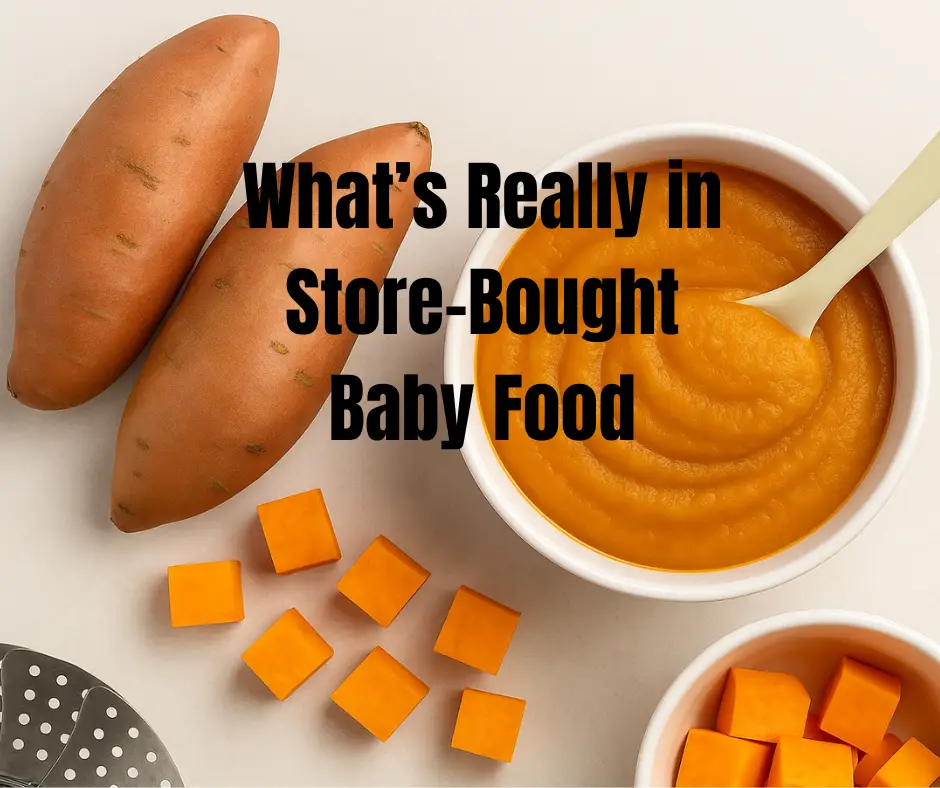
Homemade Sweet Potato Baby Food: A Wholesome Start for Your Little One
As a new parent, one of the most important decisions you’ll make is how to nourish your baby. Stroll down the baby food aisle, and you’ll see endless shelves of jars and pouches—but have you ever stopped to ask what’s really in them and where they come from?
While store-bought baby food offers convenience, making your own at home is not only more affordable, it also gives you full control over every ingredient that goes into your baby’s tiny tummy. No questionable additives. No imported mystery ingredients. Just real, wholesome food made with love.
Why Sweet Potatoes?
Sweet potatoes are one of the most popular first foods for babies—and for good reason. They’re naturally sweet, smooth in texture, and packed with essential nutrients. They’re an excellent source of:
Beta-carotene (Vitamin A): supports vision and immune health
Potassium: helps regulate fluid balance and muscle function
Vitamin K: supports healthy blood clotting
Fiber: promotes digestive health
Sweet potatoes are also gentle on tiny tummies and easy to prepare at home.
What You Might Not Know About Store-Bought Baby Food
Many parents assume that baby food is held to the strictest standards—but that’s not always the case. In fact, a large percentage of baby food sold in the U.S. is not made domestically. Some products are imported or made with imported ingredients, where agricultural practices, pesticide use, and manufacturing standards may be significantly different (and less transparent) than those in the U.S.
Even major U.S. brands may rely on global ingredient sourcing, which can make it hard to know exactly what’s in your baby’s food—or how it was grown and processed.
What’s Really Behind the “Ascorbic Acid” Label?
Check almost any baby food ingredient list and you’ll find ascorbic acid—commonly used to prevent browning and preserve color. It’s often marketed as a form of vitamin C, but don’t be fooled into thinking it’s the same as the kind found in fresh fruits.
Most commercial ascorbic acid is synthetically made from genetically modified (GMO) corn. Here’s how it works:
The corn is used to cultivate a specific type of mold, which then undergoes industrial fermentation and chemical extraction processes—often involving harsh solvents—to produce the synthetic compound we see on ingredient labels.
So while “ascorbic acid” might sound harmless or even healthy, it’s not a natural nutrient. It’s a lab-made additive used to give processed baby food a longer shelf life, not to nourish your child.
Choose the Right Sweet Potatoes
Look for firm, unblemished sweet potatoes with smooth skin. When possible, choose organic, especially for babies, to reduce exposure to pesticide residues.
Baby Food Sweet Potato
Ingredients
- 2 medium organic sweet potatoes
- Filtered water, breast milk, or formula (as needed for thinning)
Instructions
Option 1: Steamed
- Prep the Sweet PotatoesWash and peel the sweet potatoes. Cut into small, uniform chunks.Steam Until SoftPlace chunks in a steamer basket over boiling water. Cover and steam for 15–20 minutes, or until fork-tender.Blend or MashLet cool slightly, then blend or mash to desired texture. Add a splash of filtered water, breast milk, or formula to thin, if needed.
Option 2: Roasted
- Set your oven to 400°F (200°C).Prep and RoastWash the sweet potatoes and pierce them several times with a fork.Place directly on the oven rack or a lined baking sheet and roast for 45–55 minutes, or until soft and oozing slightly.Alternatively, peel and cube the sweet potatoes, toss lightly with a touch of oil (optional for older babies), and roast on a baking sheet until tender and slightly caramelized, about 30–40 minutes, flipping halfway through.Scoop & BlendLet cool slightly. If roasted whole, slice open and scoop out the soft flesh. Blend or mash, adding water, breast milk, or formula to adjust consistency.
Storage:
- Refrigerate: Up to 3 days in an airtight containerFreeze: Up to 3 months in ice cube trays or silicone molds for easy portioning
Optional Add-Ins (for babies 6+ months):
- A pinch of cinnamon or nutmegA spoonful of mashed apple, pear, or carrot for variety
Tips:
- Use ice cube trays or silicone baby food molds for easy single-serving portions.For older babies, you can mash the sweet potatoes by hand for a chunkier texture.Want to boost nutrition? Stir in a pinch of cinnamon or a bit of pureed carrot or apple.