
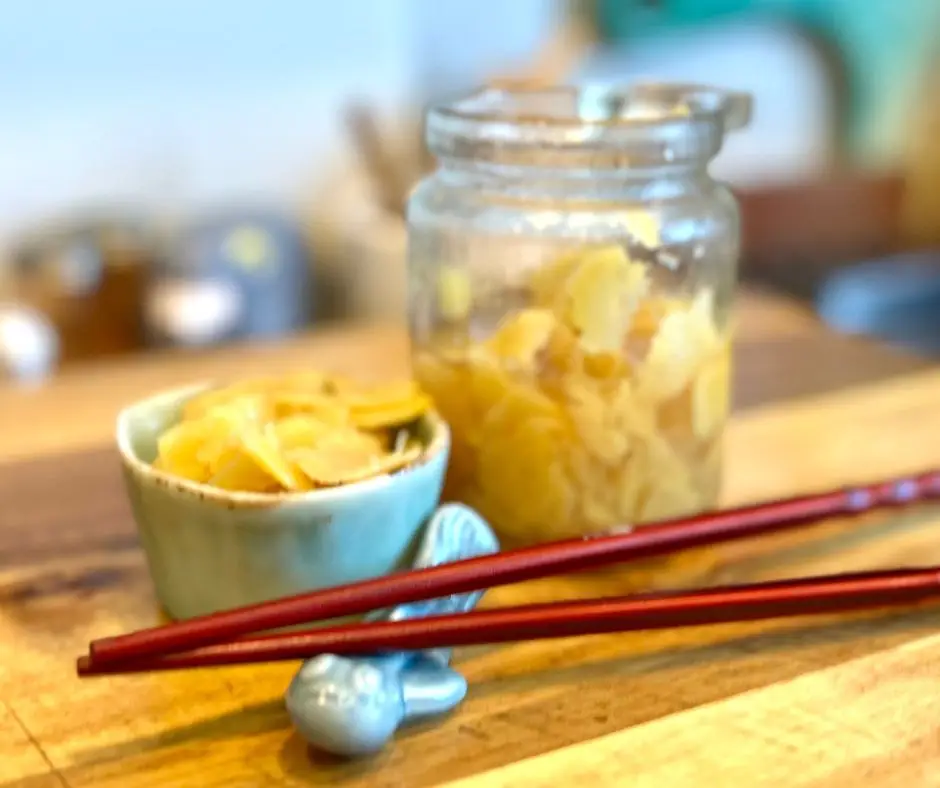
Homemade Pickled Ginger (Gari)

Homemade Pickled Ginger (Gari) – Bright, Tangy, and Naturally Made

If you’ve ever dined at a sushi restaurant, you’ve likely enjoyed the vibrant pink slivers of pickled ginger—also known as gari—served alongside your meal. This tangy condiment isn’t just for show. It’s traditionally used to cleanse the palate between different types of fish, allowing each bite to shine on its own. But its uses go far beyond sushi.

And just a quick note—although gari is spelled like my name, it’s not pronounced “Gary.” In Japanese, it’s said more like GAH-ree with a soft “a.” (No relation—just good taste.)

Pickled ginger brings brightness and zip to just about anything: rice bowls, noodle salads, sandwiches, even grilled meats. And while store-bought options exist, they’re often loaded with preservatives, artificial color, or that unmistakable processed taste. Making your own at home is easy, incredibly satisfying, and the flavor? Fresh, clean, and worlds better than anything from a jar.


Why Homemade Is Better

Homemade pickled ginger allows you to control everything—ingredients, sweetness, spice level, and color. There’s no need for Red #40 or artificial sweeteners here. Just pure rice vinegar, real cane sugar, and sea salt.

The result is a zesty, slightly sweet condiment that’s good for more than just flavor. Ginger is well known for its anti-inflammatory and digestive benefits, so a little spoonful with your meal does more than just taste good.

Choosing the Right Ginger

The key to great pickled ginger is fresh, young ginger root. It’s tender, less fibrous, and milder than mature ginger. Look for roots with smooth, pale skin and a firm, plump shape. If young ginger isn’t available, you can still use mature ginger—just peel thoroughly and slice it as thinly as possible.

Final Thoughts

Making pickled ginger from scratch is one of those simple pleasures that feels like a small act of self-care. It’s easy, it’s fast, and it gives you something vibrant and versatile to reach for anytime your meal needs a little lift. Whether you’re assembling a sushi platter or layering up a rice bowl, this homemade version will quickly become a staple

Homemade Pickled Ginger (Gari)

A small-batch, all-natural pickled ginger made with fresh slices, rice vinegar, and pure cane sugar—no dyes or additives. Perfect for sushi, bowls, and salads. Bright, zesty, and ready in just 24 hours.
Prep Time 10 minutes
Cook Time 5 minutes
salting time 30 minutes

Ingredients
  

  • 1 cup peeled, very thinly sliced fresh ginger (about 4–5 oz)
  • ¾ tsp sea salt (not iodized)
  • ½ cup  unseasoned rice vinegar
  • 2 tbsp pure cane sugar
  • Optional teaspoon pickled beet juice (for natural pink color)

Instructions
 

Salt the Ginger:

  • Place the thinly sliced ginger in a bowl and sprinkle with sea salt.
    Toss gently and let sit for 30 minutes to release excess moisture.

Wring Out the Ginger:

  • After salting, squeeze the ginger slices firmly with clean hands or a towel to remove as much liquid as possible.

Blanch the Ginger:

  • In a small saucepan, bring 1 cup of water to a boil.
    Add the wrung-out ginger slices and boil for 1 to 5 minutes1 minute for spicier ginger, 5 minutes for a milder flavor.
    Drain and press out the moisture.

Make the Brine:

  • Combine rice vinegar and sugar in a small pot.
    Heat gently, stirring until the sugar dissolves (do not boil).
    Add beet juice if using, then remove from heat.

Pack and Pickle:

  • Place the ginger slices in a clean glass jar.
    Pour the warm brine over the ginger until fully submerged.
    Let cool to room temperature, seal the jar, and refrigerate.

For best flavor and texture:

  • Wait at least 24 hours before using to allow the flavors to develop.
    Always use clean utensils when serving to avoid introducing bacteria.
    If it ever smells off, develops mold, or becomes slimy, discard it.

How to Use Pickled Ginger

  • Sure, it’s a sushi staple—but homemade pickled ginger can do so much more:
    Tuck it into rice bowls or noodle dishes
    Chop and stir into dressings or sauces
    Add it to grilled meats, especially pork or fish
    Toss with cucumber salads or shredded cabbage
    Layer it into sandwiches or wraps for a little kick
    It adds acidity, brightness, and a hint of sweetness that complements rich or savory foods beautifully.
Tried this recipe?Let us know how it was!