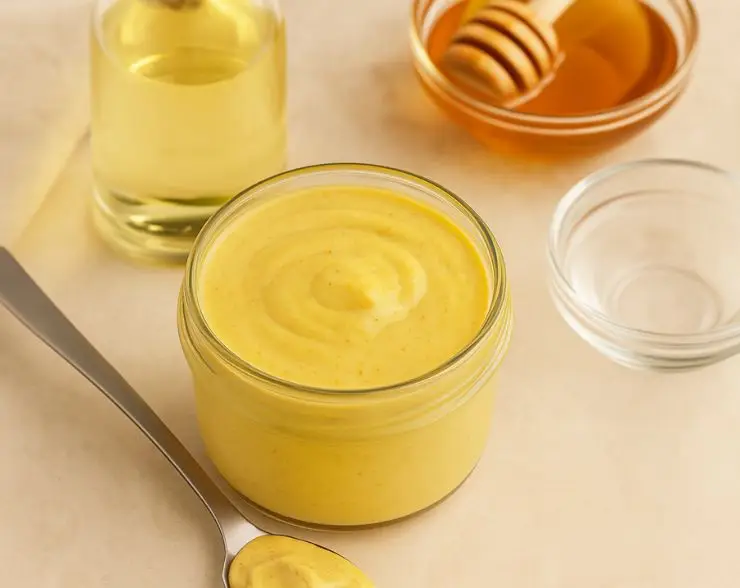
Homemade Dijon Mustard
This tangy, creamy mustard is bold, flavorful, and free from preservatives. Whether you’re looking for a probiotic-rich ferment, a quick-cooked version, or a speedy no-cook option, this recipe gives you three simple paths to Dijon perfection.
Ingredients
Base Ingredients (all versions)
- 1/2 cup dry mustard powder
- 1/3 cup dry white wine
- 1/4 cup white wine vinegar (or apple cider vinegar)
- 1 tsp kosher or sea salt (without anti-caking agents)
- 1/2 tsp garlic powder (optional)
- 1/2 tsp turmeric (optional, for color)
- 1 - 2 tsp honey, raw and unfiltered
1 tsp gives a subtle roundness without making it sweet.
2 tsp smooths out the sharpness even more and works great if using the no-cook or quick-cooked method.
Instructions
Option 1: Fermented Dijon Mustard
- A probiotic mustard that mellows as it ferments.
- 1 tablespoon fresh whey (from strained yogurt or kefir)
- Whisk all ingredients—including the whey—in a clean glass jar or bowl until smooth.
- Cover loosely with a cloth or fermentation lid.
- Let ferment at room temperature for 24 to 48 hours. Taste after 24; longer = milder.
- Seal with a tight-fitting lid and refrigerate.Flavor develops more after 5–7 days.
Option 2: Quick-Cooked Dijon Mustard
- Combine all ingredients in a small saucepan.
- Warm over low heat for 2–3 minutes, stirring constantly. Do not boil.
- Let cool to room temperature.
- Transfer to a clean jar and refrigerate. Use after 1–2 days for best flavor.
- Milder than raw mustard, ready fast, no fermentation required.
Option 3: No-Cook, No-Ferment Dijon Mustard
- Whisk all ingredients together until smooth.
- Let sit at room temperature for 1 hour.
- Store in the fridge and use after 1–2 days to allow flavors to settle.
- Zippiest of the bunch—best for strong mustard lovers.
Shelf Life & Storage
- Fermented6 months or longerNaturally preserved by beneficial bacteria.
- Cooked2 to 3 monthsMild and stable; store in airtight container.
- No-Cook1 to 2 monthsSharpest flavor; mellows with time.
Tried this recipe?Let us know how it was!