The Hidden Dangers of Garlic from China: What You Need to Know
Garlic is a staple ingredient in kitchens worldwide, cherished for its unique flavor and numerous health benefits. But here’s the hidden truth: much of the garlic sold in the United States is imported from China — and while it may be cheap and plentiful, there are serious concerns about its safety, quality, and even ethics.
Why Is Chinese Garlic So Common?
China produces roughly 80% of the world’s garlic. Its massive production capacity and lower labor costs make it significantly cheaper than U.S.-grown garlic. For many big retailers, that price point is irresistible. But as consumers, it’s important to look beyond the sticker price.
The Hidden Risks of Chinese Garlic
1.
Pesticides and Chemicals
Investigations have found banned or dangerously high pesticide residues on some Chinese garlic shipments. These chemicals are linked to hormone disruption, organ damage, and cancer risk.
2.
Chemical Whitening & Adulteration
Some imported garlic is bleached to appear perfectly white or treated with chemicals like formaldehyde to prevent sprouting. Aside from being deceptive, this reduces nutritional quality and raises health concerns.
3.
Soil Contamination
Industrial farming in polluted soils can lead to garlic contaminated with heavy metals like cadmium and lead. These toxins accumulate in the body over time.
4.
Prison Labor
One of the most disturbing truths: reports have shown that garlic in China is sometimes peeled by prison labor. Because the cloves’ acidity erodes fingernails, workers have even been documented peeling garlic with their teeth. This isn’t just a food safety issue — it’s a human rights one.
5.
Environmental & Ethical Concerns
Intensive monocropping depletes soil, pollutes water, and exploits cheap labor. Buying locally grown garlic supports more ethical, sustainable practices.
What About Pre-Peeled Garlic?
Those convenient tubs or vacuum-sealed bags of peeled cloves are often imported from China. If the package doesn’t clearly state “Product of USA”, assume it’s from overseas.
Pre-peeled garlic usually lacks the freshness and full-bodied flavor of U.S.-grown bulbs — and in some cases, it comes with the troubling backstory of prison labor.
And Garlic in a Jar?
That minced garlic in oil or water may seem convenient, but it comes with trade-offs:
Weaker flavor – once cut, allicin (the compound that gives garlic its punch) breaks down quickly.
Additives & preservatives – many jars contain citric acid or phosphoric acid. Despite its name, most citric acid isn’t from citrus at all — it’s industrially produced by fermenting black mold (Aspergillus niger) on GMO corn.
Hidden sourcing – even when jarred in the U.S., the raw garlic is often imported.
Jarred garlic isn’t just less flavorful; it’s heavily processed and often far removed from the fresh, natural product you expect.
How to Tell the Difference
Whole Bulbs
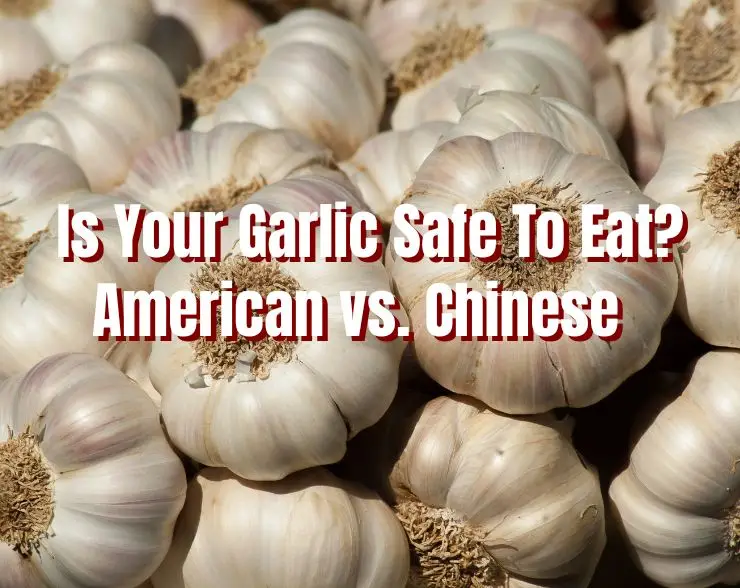
Roots attached: U.S.-grown garlic almost always still has roots at the base. Imported garlic is usually shaved clean for shipping.
Color: Local garlic tends to be cream-colored or have purple streaks. Imported garlic often looks unnaturally bright white due to bleaching.
Shape & size: U.S. garlic comes in many sizes and shapes; imported bulbs look very uniform, round, and “perfect.”
Weight & feel: High-quality garlic feels heavy for its size, with tight papery skins. Imported garlic may feel lighter or spongy with loose skins.
Labeling: Always look for “Product of USA.” If no country of origin is listed, it’s likely imported.
Pre-Peeled Cloves
If it doesn’t clearly say “Product of USA,” it’s almost certainly from China. Most pre-peeled garlic sold in tubs or vacuum packs in large stores is imported.
Jarred Garlic
Labels rarely list the garlic’s origin, but the presence of additives like citric acid is a clear sign you’re dealing with a processed, lower-quality product.
Tips for Identifying High-Quality Garlic
Look for local or organic labels – U.S.-grown or certified organic garlic follows stricter standards.
Check appearance – firm, plump cloves with tight skins are best. Avoid sprouting or soft bulbs.
Smell it – fresh garlic has a strong, pungent aroma.
Seek hardneck or heirloom varieties – they often have superior flavor.
Buy whole bulbs – they stay fresher and reduce contamination risks.
Avoid overly white bulbs – bleaching is a red flag.
The Bottom Line
Garlic should be one of the healthiest, most flavorful staples in your kitchen. But when it’s imported from China, it may come with pesticides, heavy metals, bleaching, additives, or even unethical labor practices.
Choose whole bulbs from trusted, U.S.-grown or organic sources. Skip pre-peeled packs and jarred shortcuts. Your garlic will taste better, last longer, and give you peace of mind.