
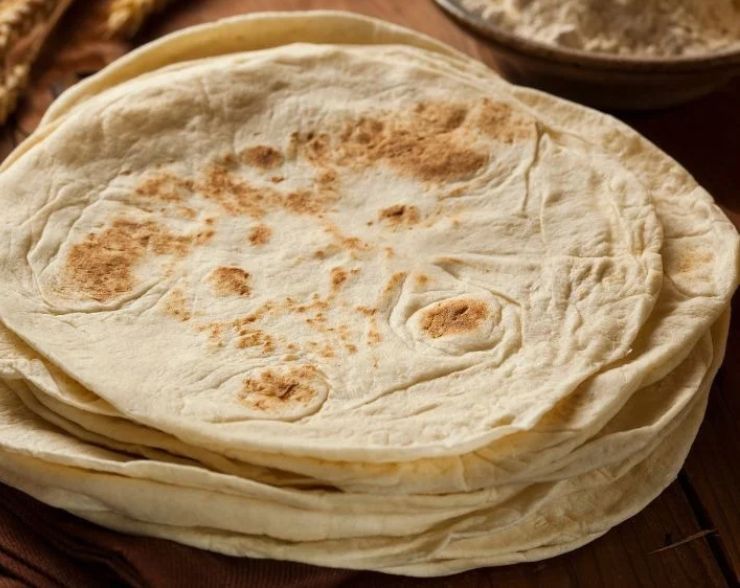
Sourdough Discard Flour Tortillas

A Delicious Way to Use Sourdough Discard

A jar of sourdough discard is far too useful to waste, especially when it can become a stack of warm, buttery flour tortillas.

These sourdough discard tortillas are soft, flexible, and sturdy enough to hold your favorite fillings without tearing. They have a subtle fermented flavor without tasting overly sour, and they require no yeast, baking powder, or rising time.

Tortillas are an unleavened bread, so the starter is not being used to make the dough rise. The discard brings its fermented flavor to the dough and contributes flour, water, and acidity, which helps give the finished tortillas a tender texture.

Five Simple Ingredients

These tortillas are made with five ingredients: flour, sourdough discard, butter, water, and kosher salt.

That short list is one of my favorite reasons to make them at home. The flour creates the structure, the butter adds flavor and tenderness, the discard adds depth, and the water brings everything together into a smooth, workable dough.

You can use active sourdough starter or unfed discard straight from the refrigerator. This recipe is written for a 100-percent-hydration starter, meaning it is fed equal weights of flour and water.


What Is in Store-Bought Flour Tortillas?

Store-bought tortillas need to remain soft and flexible while traveling through warehouses and sitting on a shelf for weeks. Depending on the brand and variety, that can mean a much longer ingredient list than you might expect.

Current packaged tortilla labels include ingredients such as enriched bleached flour, soybean or cottonseed shortening, mono- and diglycerides, cellulose gum, guar gum, fumaric acid, sodium acid pyrophosphate, calcium propionate, and sorbic acid. Formulas vary, so always read the label on the package you are purchasing. Guerrero Tortillas

Some of those ingredients help commercial tortillas remain flexible or extend their shelf life. Homemade tortillas do not need to sit in a warehouse or survive months on a grocery-store shelf. They need to taste good, fold without breaking, and hold whatever delicious filling we put inside them. I would rather make mine with ingredients I already use in my kitchen.

Why the Resting Time Matters

The dough does not need time to rise, but it does need time to rest.

Kneading develops the gluten that gives the tortillas strength. Immediately after kneading and shaping, that gluten is tight and resistant. Resting the dough balls for 30 minutes allows the gluten to relax, making them much easier to roll thin without repeatedly shrinking back.

If a dough ball still fights the rolling pin, cover it and leave it alone for another 5–10 minutes. More resting time will help far more than forcing it with the rolling pin

Shaping Smooth Dough Balls

Dividing the dough by weight gives you tortillas that cook evenly and are approximately the same size. Each portion should weigh about 54 grams.

After dividing the dough, pull the outside edges underneath and place the seam against an unfloured counter. Loosely cup your hand around the dough and move it in small circles. The gentle friction against the counter tightens the outside of the dough and forms a smooth, round ball.

A properly tightened ball also begins with a round shape, making it easier to roll a round tortilla later.


How Thin Should the Tortillas Be?

The tortillas need to be rolled very thin—nearly thin enough to see light through them. A 54-gram dough ball should roll into a tortilla approximately 8 inches across.

Use only enough flour to prevent sticking. Too much flour on the counter can become incorporated into the dough and leave the cooked tortillas dry.

Perfect circles are nice, but they are not what determines whether a tortilla is successful. Thin, evenly rolled dough is far more important than a perfectly round shape.


The Skillet Temperature Is Important

The skillet needs to be thoroughly preheated before the first tortilla goes into it. A properly heated tortilla should begin forming bubbles within about 20 seconds.

If the tortilla sits in the skillet without bubbling, the pan may not be hot enough or the dough may be too thick. If dark spots appear almost immediately, the skillet is too hot.

The goal is a few light brown spots and a soft, flexible tortilla. Cooking it too long drives out its moisture and turns it dry or crisp.

Do Not Be Afraid of the Bubbles

Those wonderful bubbles are exactly what you want. Steam forms inside the thin dough and causes sections of the tortilla to inflate. Some may develop several small bubbles, while others may puff dramatically across half the tortilla.

Large bubbles mean you rolled the dough thinly and had the skillet properly heated. There is no need to press them down.

Keep Them Covered After Cooking

Place each tortilla inside a folded kitchen towel as soon as it leaves the skillet. Stack the warm tortillas together and keep the towel closed around them.

The moisture released by the warm tortillas becomes trapped inside the towel, gently steaming and softening the stack. This simple step is one of the secrets to tortillas that remain flexible instead of turning dry around the edges.


More Than Just Taco Night

These tortillas are perfect for tacos, fajitas, quesadillas, breakfast wraps, enchiladas, sandwich wraps, and homemade tortilla chips.

They also make an excellent pantry staple when you are trying to stretch the time between grocery trips. The ingredients are simple, the dough comes together quickly, and the finished tortillas keep well in the refrigerator or freezer.

Once you have eaten a tortilla warm from the skillet, wrapped around your favorite filling, the packaged version has a difficult time competing.

Sourdough Discard Flour Tortillas

Soft, buttery, and flexible, these homemade flour tortillas use sourdough discard for subtle fermented flavor and a tender texture. They require only five simple ingredients and no rising time.
Prep Time 20 minutes
Cook Time 10 minutes
resting time 30 minutes
Course Side Dish, Snack
Cuisine American, Mexican
Servings 8 medium tortillas

Ingredients
  

  • 210 grams 1¾ cups all-purpose flour
  • 5 grams about 1½ teaspoons Diamond Crystal kosher salt
  • 35 grams 2½ tablespoons butter, softened
  • 90 grams sourdough discard or active starter
  • 90 grams 6 tablespoons warm water, about 105–110°F

Instructions
 

  • Whisk the flour and salt together in a large mixing bowl.
  • Add the softened butter. Use a fork to press and work the butter into the flour until it is evenly distributed and the mixture resembles coarse crumbs with no large pieces of butter remaining.
  • Combine the sourdough discard and warm water in a separate bowl or measuring cup. Pour the mixture into the flour. Use a Danish dough whisk or your hand to mix until all the flour is moistened and a rough, shaggy dough forms.
  • Turn the dough onto a lightly floured work surface. Knead by pressing the dough forward with the heel of your hand, folding it back over itself, and turning it slightly before repeating. Knead for 5–7 minutes, until the dough becomes smooth, soft, and elastic. It may feel slightly tacky at first, so continue kneading before adding more flour. If it is still sticking heavily to your hands and the counter after several minutes, dust the work surface with a small amount of flour.
  • Weigh the finished dough and divide it into 8 equal portions, approximately 54 grams each.
  • Working with one portion at a time, pull the outside edges toward the underside to begin forming a round ball. Place the dough seam-side down on an unfloured section of the counter. Loosely cup your hand around the dough and move your hand in small circles, allowing the dough to roll against the counter. The friction between the dough and the counter will tighten the surface and form a smooth, round ball. Repeat with the remaining portions.
  • Arrange the dough balls on the counter or a tray with enough room between them that they do not touch. Cover them with a damp kitchen towel and let them rest for 30 minutes. This rest relaxes the gluten so the tortillas can be rolled thin without shrinking back.
  • Preheat a dry cast-iron skillet or griddle over medium heat. Allow it to heat thoroughly before cooking the first tortilla. Do not add oil or butter to the pan.
  • Lightly flour the work surface and rolling pin. Place one dough ball on the counter and flatten it gently with your palm. Roll from the center outward, turning the dough frequently to encourage an even circle. Continue rolling until the tortilla is approximately 8 inches across and thin enough that you can almost see light through it. Keep the remaining dough balls covered while you work.
  • If the tortilla repeatedly shrinks back while you are rolling it, cover it and let it rest for another 5–10 minutes before continuing. Avoid adding more flour than necessary, as too much flour can dry out the tortillas.
  • Carefully lift the rolled tortilla and place it flat in the preheated skillet. Cook for 20–40 seconds, until bubbles begin forming across the surface and a few light brown spots appear underneath.
  • Flip the tortilla and cook the second side for another 10–15 seconds. Remove it while it is still soft and flexible. Deep browning or a long cooking time can make the tortilla dry and crisp.
  • Immediately place the cooked tortilla inside a clean folded kitchen towel and cover it completely. The trapped steam helps soften the tortilla and keeps it flexible.
  • Repeat the rolling and cooking process with the remaining dough balls, stacking each cooked tortilla inside the towel. Adjust the heat as needed. Raise it slightly if the tortilla does not begin bubbling within about 20 seconds, or lower it if dark spots develop almost immediately.
  • Notes
  • This recipe is written for a 100-percent-hydration sourdough starter made with equal weights of flour and water. Either active starter or unfed sourdough discard can be used.
  • Tortillas are an unleavened bread, so the sourdough is not included to make them rise. It adds subtle fermented flavor and contributes to their tender texture.
  • Large bubbles are normal and indicate that the tortilla was rolled thinly and the skillet was properly heated.
  • Storage
  • Allow the tortillas to cool completely. Keep them stacked, wrap the stack in a clean, dry kitchen towel, and place it inside an airtight bag or container. Store at room temperature for 2–3 days or refrigerate for up to 2 weeks.
  • Freeze the tortillas for up to 3 months for the best texture. Place parchment paper between them if you want to remove and thaw only one or two at a time. Thaw overnight in the refrigerator or briefly at room temperature, then warm in a dry skillet until soft and flexible.
Keyword homemade, quick, sourdough, unleavened
Tried this recipe?Let us know how it was!