
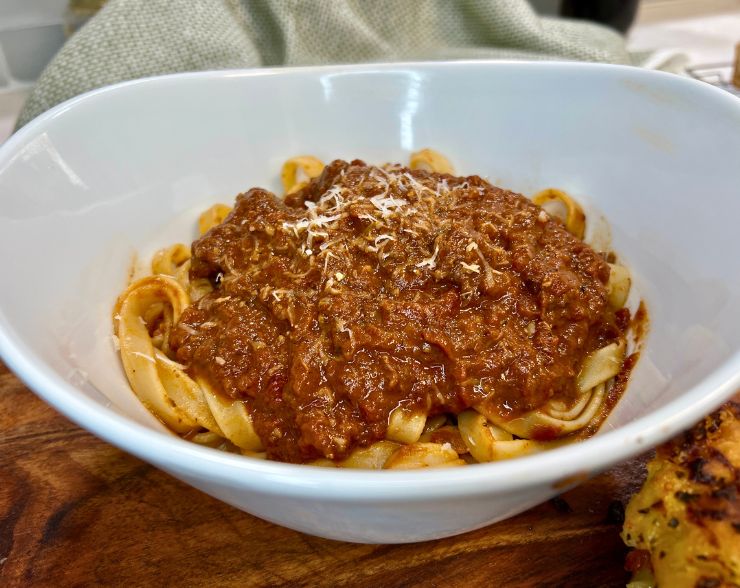
Slow Cooked Beef Ragù (with Optional Bolognese Finish)

This is a true slow-cooked beef ragù — rich, balanced, and built the right way with simple ingredients and time. The beef is gently braised in tomatoes, red wine, and aromatics until tender enough to fall apart, creating a sauce that is deeply flavorful without being heavy.You can serve it just as it is for a rustic ragù, or finish it with a touch of cream and a splash of vinegar to turn it into a silky, Bolognese-style sauce. Same base, two completely different finishes.
Ingredients
- 2 pounds braising beef (beef chuck, short ribs, beef shank, or stew meat), off-the-bone weight
- 1 onion, finely diced
- 3 carrots, finely diced
- 1 rib celery, finely diced (optional)
- 5-6 cloves garlic, minced
- olive oil, or beef tallow
- 1 tbsp butter
- 2-3 Tbsp tomato paste
- 1-1½ cups red wine
- 1 Tbsp Italian seasoning.
- 1/2 tsp Crushed red peppers
- 2 (28-ounce) cans San Marzano tomatoes
- 1-1½ cups red wine
- 2-4 anchovy fillets
- Salt, to taste (start with about 1 teaspoon kosher, then adjust)
- 1/2 tsp White pepper
- 2 bay leaves
- 1-2 Fresh rosemary sprigs optional
- 2 tsp balsamic vinegar or red wine vinegar
- Parmesan rind (optional)
- Freshly grated cheese, for serving
Optional Bolognese Sauce
- 1/2-3/4 cup heavy cream
Instructions
1. Prepare and sear the beef
Cut the beef into 2 to 3 inch chunks and season lightly with salt and white pepper.Heat the olive oil in a large Dutch oven over medium-high heat. Sear the beef in batches until well browned on all sides. Do not overcrowd the pan.Remove the beef and set aside.2. Build the base
Lower the heat to medium.Add the onion, carrots, and celery to the same pot with a pinch of salt. Cook for about 5 minutes, stirring occasionally, until softened. You are not looking for browning here, just softening and building flavor.Add the garlic and cook for about 30 seconds, just until fragrant.3. Add tomato paste and deglaze
Stir in the tomato paste and cook for 1 to 2 minutes to deepen the flavor.Pour in the red wine, scraping up any browned bits from the bottom of the pot. Let it simmer and reduce by about half.4. Build the sauce
Add the beef stock and stir to combine.Add the San Marzano tomatoes, crushing them by hand as they go in.Stir in:anchovy filletsbay leafrosemary, if usingItalian seasoningcrushed red pepperParmesan rind, if usingReturn the beef and any juices to the pot.Bring everything to a gentle simmer.5. Slow cook
Reduce heat to low, partially cover, and let simmer gently for 3 to 4 hours, stirring occasionally.This is not a quick sauce. The depth comes from low, slow cooking.6. Break down the beef and reduce
Once the beef is very tender, use the back of a spoon or a wooden spoon to gently break it apart directly in the sauce.It should fall apart easily and shred into the sauce as you stir.Continue simmering uncovered as needed to thicken the sauce to your desired consistency.Taste and adjust salt and pepper at the end.7. Finish and balance
Remove the bay leaf, rosemary sprig, and Parmesan rind, if used.Finish the sauce with:1 to 2 teaspoons balsamic vinegar or red wine vinegar, to tasteor1 teaspoon of each for a more balanced finishStir well and taste before serving. The sauce should be rich, balanced, and not heavy.➤ Optional Bolognese-Style Finish
During the last 15 to 20 minutes of cooking:Stir in:1/2 to 3/4 cup heavy cream1 to 2 teaspoons balsamic vinegar or red wine vinegar, to tasteor 1 teaspoon of eachLet it gently simmer until the sauce becomes silky and well balanced.
Serving Suggestions
- Serve over Fettuccine, Spaghetti, or your favorite pasta, finished with freshly grated cheese.Spoon over creamy polenta for a softer, more comforting option.Use as a rich filling for lasagna or baked pasta dishes.Serve over roasted vegetables for a lighter, lower-carb option.
Notes
- On the vinegar:Balsamic vinegar will give you a slightly sweeter, softer finish, while red wine vinegar is brighter and sharper. You can use either one depending on what you prefer, or use a little of both for a more balanced flavor.
- On the Bolognese finish:Adding heavy cream softens the acidity of the tomatoes and creates a smoother, more rounded sauce. It doesn’t make it heavy — it actually brings everything together and gives the sauce that classic, silky texture.
- On the Parmesan rind (if using):This is an easy way to add extra richness and depth. It won’t make the sauce cheesy, it just enhances the overall flavor.
- On consistency:If the sauce feels too loose at the end, let it simmer uncovered a little longer. You’re looking for a thick, spoon-coating sauce, not something watery.
Tried this recipe?Let us know how it was!