Why I Use 12% Food-Grade Hydrogen Peroxide at Home and On Board
Natural, powerful, versatile, and safer for the environment.
Whether you live in a house, RV, camper, or on the water like we do, every choice you make, right down to your cleaning products, affects the spaces where you live, cook, and spend time with family.
That’s why I always keep 12% food-grade hydrogen peroxide on hand.
From washing produce and cleaning cutting boards to maintaining freshwater systems and tackling damp spaces, it is one of the most versatile products I use both at home and aboard.
Unlike many conventional cleaners, hydrogen peroxide breaks down into water and oxygen, leaving no chemical residue behind. For us, where storage space onboard is limited and every product needs to earn its place, it has become one of the hardest-working items we keep stocked.
What Makes Food-Grade Hydrogen Peroxide Different?
Natural & Eco-Friendly
- Breaks down into water and oxygen
- Leaves no chemical residue behind
- Helps reduce the number of cleaning products needed
Free From Added Ingredients
- Food-grade versions are generally free from stabilizers, fragrances, dyes, and additives commonly found in some household cleaning products
- No artificial fragrance residue left behind
Multipurpose
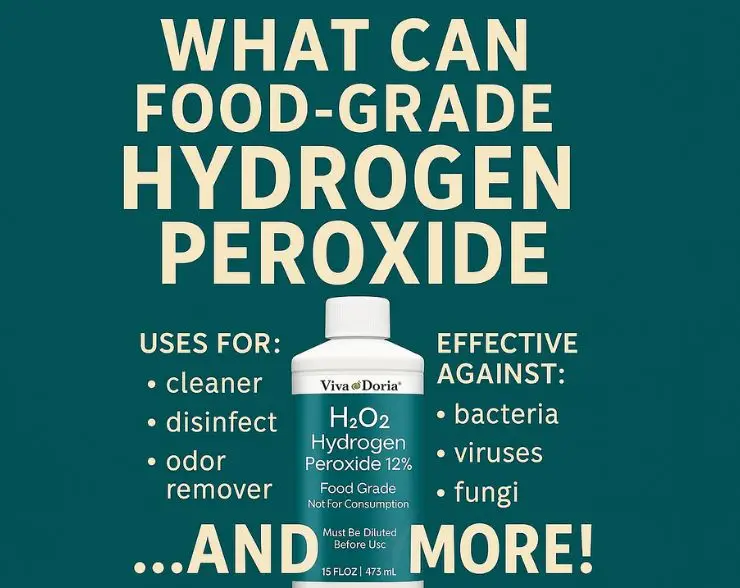
- Cleaning
- Disinfecting
- Produce washing
- Laundry
- Odor control
- Surface sanitation
- Freshwater system maintenance
Budget Friendly
Because it is concentrated, a single bottle can make multiple cleaning solutions and lasts much longer than many ready-to-use products.
How Hydrogen Peroxide Works
Hydrogen peroxide works through oxidation. When it comes into contact with microorganisms and organic matter, it releases oxygen molecules that help break down cell walls and disrupt many bacteria, viruses, molds, and fungi.
Its effectiveness depends on:
- Proper dilution
- Clean surfaces before disinfecting
- Sufficient contact time
- Correct storage away from heat and light
Before You Mix Anything: Storage Matters
Hydrogen peroxide is sensitive to light, heat, minerals, and contamination.
For best results:
- Always dilute with distilled water rather than tap water
- Minerals, impurities, and organic matter in water can speed decomposition and reduce effectiveness
- Store diluted mixtures in dark glass or opaque containers
- Keep bottles tightly closed and away from heat and sunlight
- Label diluted mixtures clearly with contents and date mixed
- Mix smaller batches more often rather than storing large amounts long term
Light exposure breaks hydrogen peroxide down faster, which means a clear bottle sitting on the counter may lose effectiveness much sooner.
What Is Hydrogen Peroxide Effective Against?
Hydrogen peroxide is considered a broad-spectrum disinfectant, meaning it is effective against many microorganisms when used correctly.
Viruses
- Coronaviruses, including SARS-CoV-2 (COVID-19)
- SARS-related viruses
- Influenza viruses
- Many common cold viruses
- Many enveloped viruses
Bacteria
- E. coli
- Salmonella
- Listeria
- Staphylococcus species
- Streptococcus species
- Many common household and foodborne bacteria
Mold, Fungi & Yeast
- Mold and mildew organisms
- Candida species
- Yeasts
- Many fungi commonly found in damp environments
Harder-to-Kill Organisms
- Some bacterial spores may require stronger concentrations or longer contact times
- Biofilm-forming microbes that build up on surfaces over time
Remember, no disinfectant works well on dirty surfaces. Clean first, then disinfect.
Ways We Use It at Home and On Board
Living aboard means constantly fighting moisture, limited storage, and spaces that work extra hard. Hydrogen peroxide has become one of my go-to products for:
- Galley counters
- Cutting boards
- Knives and kitchen tools
- Heads and toilets
- Shower walls
- Garbage bins
- Damp towels
- Coolers
- Storage containers
- High-touch surfaces
- Produce washing
- Freshwater systems and tanks
Water Tank & Freshwater System Use
For boaters, RV owners, and anyone relying on stored freshwater, keeping tanks and water systems clean matters.
Hydrogen peroxide is commonly used in various water treatment and sanitation applications because it helps reduce bacteria, biofilm buildup, odors, and organic contamination while eventually breaking down into water and oxygen over time.
I use food-grade hydrogen peroxide as part of maintaining onboard freshwater systems because:
- It can help reduce odors in tanks and water lines
- It may help reduce biofilm buildup in stored water systems
- It breaks down naturally over time
- It does not leave behind the strong smell often associated with some disinfectants
- One product can serve multiple jobs onboard
Many water treatment facilities and industrial water systems use hydrogen peroxide in certain applications, showing how versatile it can be when used correctly.
Important Notes
- Always use proper dilution rates for your tank size
- Allow adequate contact time before use
- Flush systems when appropriate after sanitizing
- Follow your tank manufacturer recommendations
- More is not always better, proper concentration matters
Whether you live aboard, camp off-grid, or travel by RV, keeping stored water clean is just as important as keeping your kitchen clean.
DIY Vegetable Wash
Although I try to buy local and organic whenever possible, provisioning on the water sometimes means shopping where availability wins.
A simple produce wash can help remove dirt and reduce surface contamination before food goes into your kitchen.
Mix:
- 1 cup distilled water
- 5 tablespoons 12% food-grade hydrogen peroxide
Store in a dark glass bottle or opaque container. Hydrogen peroxide breaks down when exposed to light, heat, and contaminants, reducing effectiveness over time.
To Use:
- Spray produce thoroughly
- Let sit about 1 minute
- Wipe firm produce clean
- Rinse delicate produce gently with cool water if desired
This solution may also help reduce surface mold and bacteria that contribute to spoilage.
Heavy-Duty Surface Cleaner
For cutting boards, sinks, toilets, bathroom surfaces, trash cans, and other high-contact areas:
Mix:
- 1 cup distilled water
- 1 cup 12% food-grade hydrogen peroxide
Store in a dark spray bottle or opaque container. For best shelf life and effectiveness, always use distilled water and keep away from heat and sunlight.
To Use:
- Spray surfaces thoroughly
- Allow 5 to 10 minutes contact time
- Wipe clean
For food-contact surfaces, rinsing is optional because hydrogen peroxide breaks down into water and oxygen, although rinsing before immediate food prep is never a bad idea.
Important Safety Notes
12% food-grade hydrogen peroxide is much stronger than the typical 3% brown bottle found in stores.
Always:
- Wear gloves when handling concentrates
- Store away from children and pets
- Use dark containers to protect potency
- Avoid contact with eyes and skin
- Test delicate surfaces before use
- Avoid natural stone, unsealed wood, and porous materials that may discolor
Like bleach, stronger does not always mean better. Proper dilution matters.
Final Thoughts
Whether I’m washing produce, cleaning the kitchen, freshening up the bathroom, maintaining water tanks, or tackling damp spaces, 12% food-grade hydrogen peroxide has earned permanent storage space in our home and aboard.
Supply Suggestions
Ingredients
- 3 % Hydrogen peroxide
- 12 % Hydrogen peroxide MY favorite
- Spray bottle black
- spray bottles multi colored