
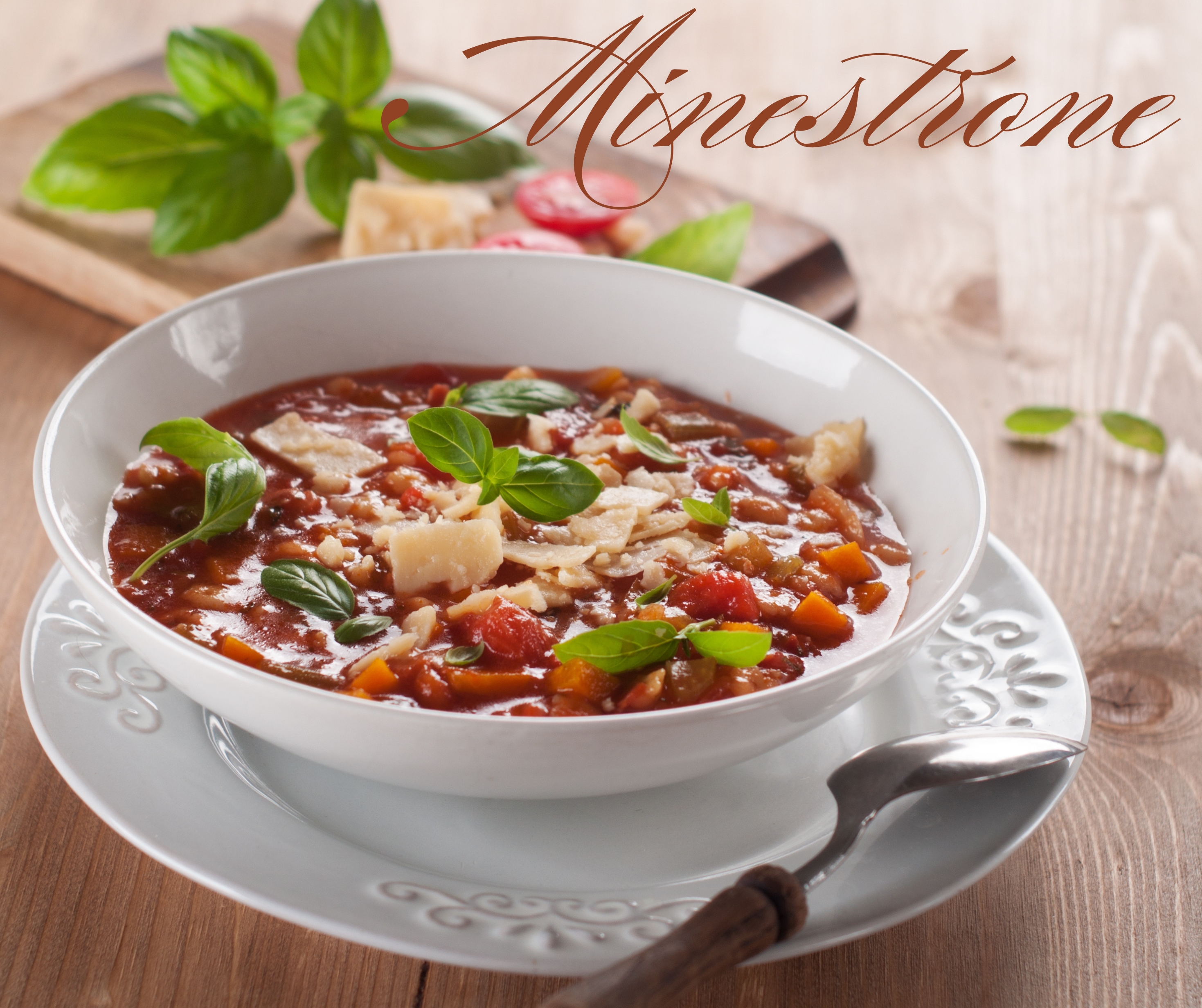
Minestrone Soup

Minestrone Soup: A Hearty Italian Classic with Endless Variations

Minestrone is more than just a soup—it’s a story of Italian resourcefulness, regional flavor, and timeless tradition. At its heart, minestrone is a vegetable soup, but ask five different Italian nonnas for a recipe and you’ll get five different versions. That’s because minestrone isn’t a strict recipe—it’s a flexible, nourishing dish that adapts to the seasons, the pantry, and the cook.

What Does Minestron Mean?

The word minestrone (pronounced mee-neh-STROH-neh) comes from the Italian verb minestrare, which means “to serve” or “to dish out.” The suffix “-one” implies something large or robust. So, minestrone translates loosely to “big soup” or “hearty serving.” Originally a humble peasant dish, it was designed to make use of leftover vegetables, beans, and grains—stretching limited resources into a satisfying meal.

The Origins of Minestrone Soup

Minestrone dates back to Ancient Rome, when the diet was primarily plant-based and centered around legumes, grains, and seasonal vegetables. Early versions of this soup were built around farro (an ancient grain), onions, garlic, carrots, cabbage, and lentils. With time and trade, ingredients like tomatoes and potatoes were introduced to the Italian table and eventually found their way into the pot.

Minestrone grew from cucina povera—the “poor kitchen”—a style of cooking that prized simplicity, waste reduction, and homegrown produce. Over centuries, it evolved into a comfort food staple that’s now loved around the world.

Regional Variations Across Italy

There is no one true version of minestrone. The beauty of this dish lies in its adaptability. Each region—and often each household—has its own take, depending on climate, local ingredients, and tradition.

🌿

Northern Italy (Lombardy, Piedmont)

  • Richer versions often include rice or small pasta.

  • May include pancetta or lard for depth.

  • Root vegetables and savoy cabbage are common in colder months.

🍅

Central Italy (Tuscany, Umbria)

  • Often made with cannellini beans and finished with stale bread (like ribollita).

  • Tomato-heavy broths with Tuscan kale (cavolo nero) and zucchini.

  • Lightly seasoned with garlic and rosemary.

🫘

Southern Italy (Campania, Calabria)

  • Bolder flavors with spicy peppers, eggplant, or green beans.

  • Often uses ditalini pasta or broken spaghetti.

  • May feature pecorino cheese or a spoonful of homemade pesto.

Key Ingredients and Common Additions

While the ingredients vary widely, minestrone typically includes:

  • A broth base (vegetable or light meat-based)

  • Seasonal vegetables (like carrots, celery, zucchini, tomatoes, potatoes)

  • Beans (kidney, borlotti, cannellini)

  • A grain or starch (pasta, rice, or even barley)

  • Herbs like bay leaf, basil, thyme, or oregano

  • Optional: cheese rind (like Parmigiano) for richness

Minestrone Around the World

Modern minestrone has made its way onto tables far beyond Italy. In America, it’s often a tomato-heavy soup with macaroni noodles, kidney beans, and sometimes ground beef. In France, you’ll find versions closer to Provençal soupe au pistou, finished with a garlic-basil paste. Vegetarian versions are common, but many cooks still use pancetta, bacon, or stock for added flavor.

Why Minestrone Endures

Minestrone’s enduring popularity comes from its flexibility and nutritional value. It’s easy to make in big batches, perfect for meal prep, and a wonderful way to use up whatever’s left in your fridge or pantry. Whether it’s a thick winter bowl served with crusty bread or a lighter spring version with peas and asparagus, minestrone suits any season.

Minestrone Soup

A hearty and wholesome Italian vegetable soup made with clean ingredients. Packed with beans, pasta, and seasonal veggies in a rich tomato broth—easy to customize and perfect for any time of year.
Prep Time 15 minutes
Cook Time 30 minutes

Ingredients
  

Base Vegetables

  • 2 tbsp extra virgine olive oil
  • 1 onion, diced
  • 4-6 cloves garlic, minced
  • 2 carrots, diced
  • 2  ribs celery, diced

Core Ingredients:

  • 1 medium  zucchini, chopped
  • 1 medium yellow squash, chopped
  • 1 cup  green beans, trimmed and chopped
  • 1 (28 oz) whole peeled tomatoes Drain the juice, or puree , and chop the tomatoes by hand resurve the juice for the soup
  • 6 cups vegetable or chicken broth
  • 1 (15 oz) cannellini or kidney beans, drained and rinsed

Seasonings:

Starch (choose one):

  • 1 cup small pasta (ditalini, macaroni, or shells)
  • 1/2 cup cooked rice
  • 1/2 cup cooked barley or farro
  • 1 cup diced potato

Acid (choose one, add at the end):

  • 1 tbsp  fresh lemon juice (bright, clean flavor)
  • 1-2 tsp red wine vinegar (earthier, classic Italian)
  • 1 tbsp balsamic vinegar (adds depth and slight sweetness)

Optional Add-Ins:

  • 1-2 cups chopped cabbage or kale (add during last 10 minutes)
  • 1-2 cups chopped spinach (stir in at the end)
  • 2 tbsp tomato paste for depth
  • Red pepper flakes for heat
  • Fresh basil or parsley for garnish
  • Spoonful of pesto 

Instructions
 

 Instructions

  • Sauté the base:
    In a large soup pot, heat the olive oil over medium heat. Add the onion, carrots, and celery. Cook until softened, about 6–8 minutes. Add garlic and cook for 1 more minute.
    Build the soup:
    Stir in tomatoes, broth, zucchini, green beans, herbs, and Parmesan rind (if using). Bring to a simmer and cook for 15–20 minutes.
    Add starch and beans:
    Add your choice of starch and the drained beans. If using pasta or potatoes, simmer another 10–15 minutes until tender. If using cooked grains like rice or barley, stir them in during the last 5 minutes to warm through.
    Finish and season:
    Add leafy greens, if using, and stir until wilted. Season with salt and pepper to taste. Remove Parmesan rind.
    Serve:
    Ladle into bowls and top with fresh herbs or a spoonful of pesto if desired. Serve with crusty bread.

Seasonal & Dietary Variations

  • Swap Ideas
    Spring
    Peas, asparagus, baby spinach, leeks
    Summer
    Corn, zucchini, green beans, fresh basil
    Fall/Winter
    Kale, cabbage, potatoes, butternut squash
    Vegetarian/Vegan
    Use vegetable broth and skip cheese; stir in nutritional yeast for flavor
    Hearty
    Add pancetta or bacon at the sauté stage, or use beef broth
    Low-Carb
    Skip starches and double up on non-starchy vegetables

Tip: Minestrone keeps well in the fridge for 4–5 days and freezes beautifully—just cook pasta separately to avoid it becoming mushy.

    Why No Diced Tomatoes?

    • Many brands coat diced tomatoes with firming agents (like calcium chloride) to help them keep their shape during cooking. While safe to eat, these additives can alter texture and flavor. That’s why this version uses whole peeled tomatoes, which are more natural and tender. Simply drain, puree the liquid, and chop by hand for a fresher, cleaner result.
    Tried this recipe?Let us know how it was!