
Homemade Fig Newtons

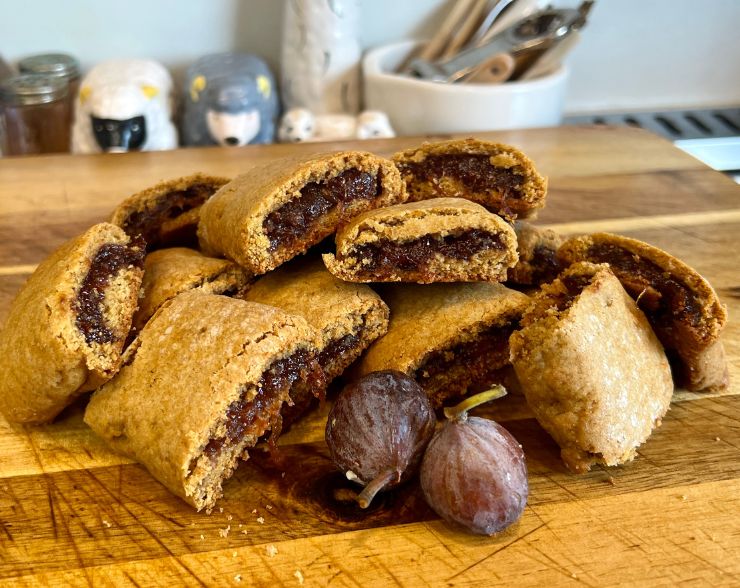
Classic Fig Newtons made from scratch with a soft whole-wheat and molasses cookie wrapped around a thick, jammy filling made with either fresh or dried figs.
Ingredients
Fresh Fig Filling
- 1 pound fresh figs, stems removed and figs chopped
- 1/4 cup cane sugar, 3 tablespoons honey, or 1/4 cup maple syrup
- 1 tbsp lemon juice
- 1 tsp lemon zest
- 1/4 tsp kosher salt
Dried Fig Filling
- 8 oz dried figs, stems removed and figs chopped
- 1 cup water
- 1 tbsp lemon juice
- 1 tsp lemon zest
- 1/4 tsp kosher salt
- 2 tbsp honey or maple syrup, optional
Whole-Wheat Molasses Dough
- 1/2 cup butter, softened
- 1/4 cup pure cane sugar
- 1 tbsp molasses
- 1 large egg
- 1 tsp vanilla extract
- 1 tsp orange zest
- 1 cup (120 g) all-purpose flour
- 3/4 cup (90 g) whole-wheat flour
- 1/2 tsp baking powder
- 1/4 tsp baking soda
- 1/4 tsp kosher salt
Instructions
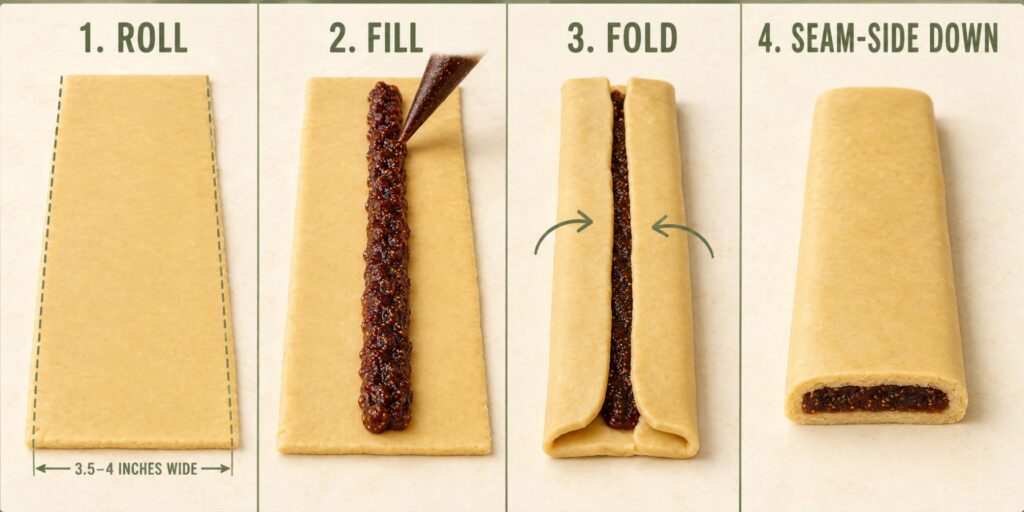
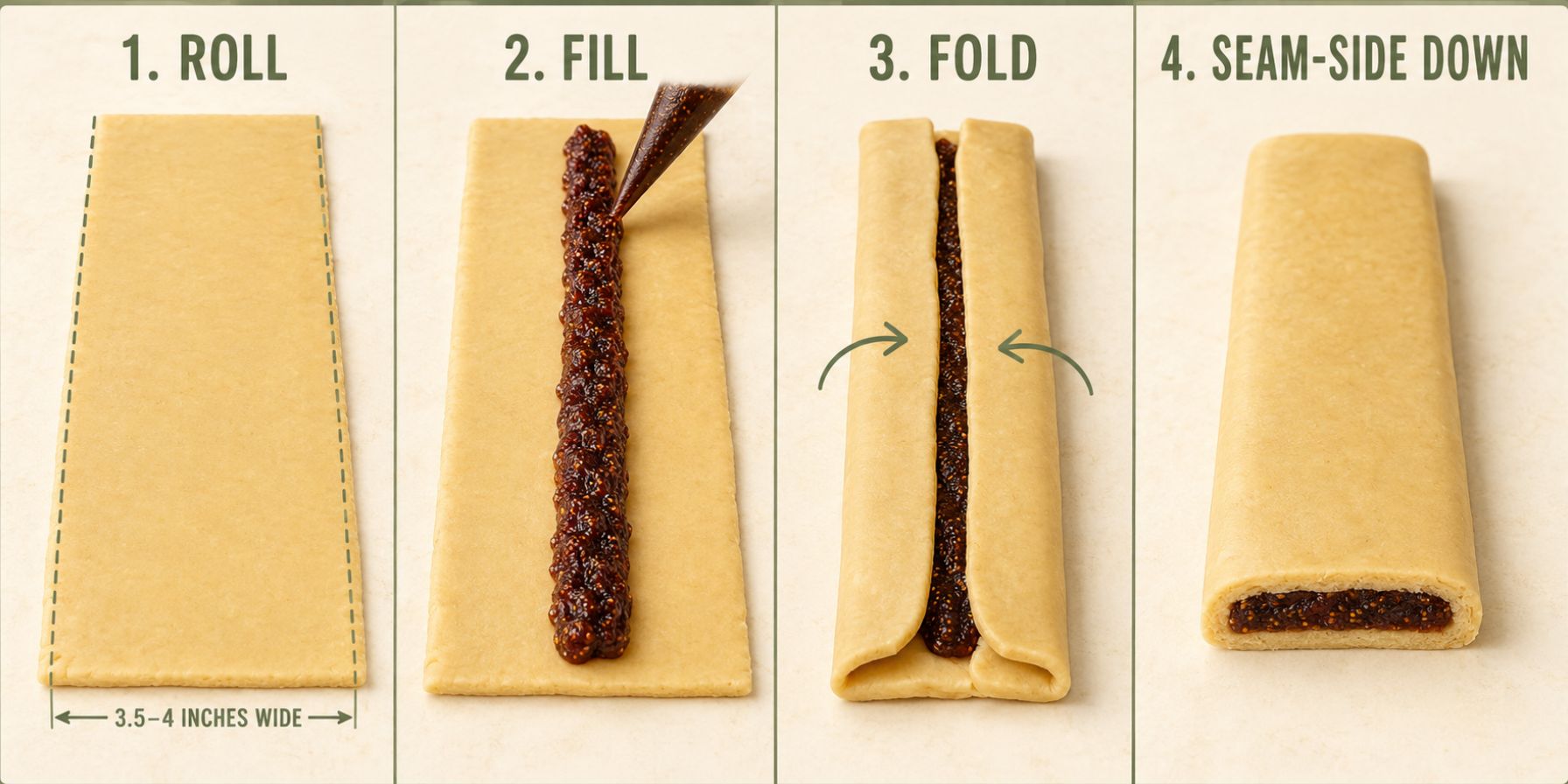
- For the fresh fig filling, combine the chopped figs, cane sugar, honey, or maple syrup, lemon juice, lemon zest, and salt in a saucepan. Cook over medium-low heat, stirring frequently, until the figs break down and the filling becomes very thick, about 20–30 minutes. Add water only if the figs begin sticking before releasing their juices. Maple syrup adds more liquid, so the filling may take a little longer to cook down.Mash or blend the fresh fig mixture until fairly smooth. If necessary, return it to the saucepan and continue cooking until a spoon drawn across the bottom leaves a path that does not immediately close. Transfer to a bowl and cool completely.For the dried fig filling, combine the chopped dried figs, water, lemon juice, lemon zest, and salt in a saucepan. Bring to a gentle simmer, cover, and cook over low heat for 10–15 minutes, stirring occasionally, until the figs are very soft and most of the water has been absorbed. Add the optional honey or maple syrup after tasting.Mash or blend the dried fig mixture until fairly smooth. Return it to the saucepan if needed and cook uncovered over low heat until very thick. Add a tablespoon of water if the mixture is too thick to blend. Transfer to a bowl and cool completely.To make the dough, beat the softened butter and cane sugar until smooth and slightly fluffy, about 2 minutes. Beat in the molasses, egg, vanilla, and orange zest. The mixture may look slightly curdled at this stage.In a separate bowl, whisk together the all-purpose flour, whole-wheat flour, baking powder, baking soda, and salt. Add the dry ingredients to the butter mixture and mix just until no dry flour remains.Flatten the dough into a rectangle, cover, and refrigerate for at least 1 hour.Heat the oven to 350°F. Line a baking sheet with parchment paper.Divide the chilled dough in half. Roll one half at a time between two sheets of parchment paper to approximately 1/8 inch thick. Trim the uneven edges and cut the dough into long strips approximately 3 1/2–4 inches wide.Pipe or spoon a narrow strip of completely cooled fig filling down the center of each piece of dough. Fold one long side over the filling, then fold the other side over so the dough overlaps slightly and completely encloses the filling.Turn the filled logs seam-side down and gently flatten them. If the dough has become soft, refrigerate the logs for 15–20 minutes before baking.Bake for 15–18 minutes, until the cookies are set and just lightly colored along the bottom edges. Cool for about 5 minutes, then cut the warm logs into individual cookies.
Notes
- The filling must be completely cool and thick enough to hold its shape before assembling the cookies.Dried figs vary in moisture. Add a little extra water if they are not soft after simmering, but avoid making the finished filling loose.The cookies become softer and more like traditional Fig Newtons after resting overnight in a covered container.
Tried this recipe?Let us know how it was!