
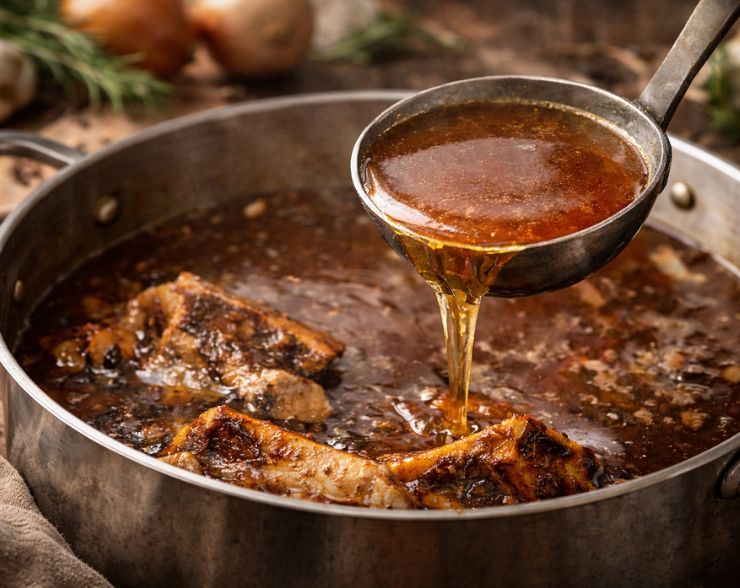
Beef Stock

This homemade beef stock is built from roasted bones and gently simmered for 24 hours to extract full flavor and natural collagen. Left unsalted for flexibility, it serves as a strong foundation for soups, sauces, and braised dishes.
Ingredients
- 4-5 pounds beef bones, a mix of marrow bones and collagen-rich joints
- 4 tbsp tomato paste
- 1 large yellow onion, cut into large chunks
- 2 carrots, cut into large chunks
- 2 celery stalks, cut into large chunks
- bay leaves, optional
- 8-10 whole black peppercorns, optional
- 4-5 quarts cold filtered water, or enough to cover bones by 1–2 inches
Instructions
Roast the Bones
Adjust oven rack to upper-middle position and heat oven to 500 to 550°F.Arrange bones in a single layer on a heavy sheet pan. Line with parchment if desired for easier cleanup.Roast until well browned, about 15 minutes.Transfer bones to a large, heavy-bottom stockpot.Roast the Vegetables
Place onion, carrots, and celery in a large bowl.Pour any rendered fat from the sheet pan over the vegetables. Add tomato paste and toss to coat evenly.Spread vegetables in a single layer on the same sheet pan.Return to oven and roast until vegetables begin to caramelize and tomato paste darkens slightly, about 10 minutes.Transfer vegetables to the stockpot with the bones.Deglaze the sheet pan with hot water, scraping up any browned bits, and add that liquid to the pot.Add Water and Bring to Simmer
Add cold filtered water, covering bones and vegetables by 1 to 2 inches.Starting with cold water allows proteins and impurities to rise gradually as the liquid heats, making them easier to skim and resulting in a clearer stock.Bring to a gentle simmer over medium heat. As foam rises to the surface, skim and discard.Once the stock reaches a gentle simmer, reduce heat to maintain a very low, steady tremble. Do not allow the stock to boil.Do not stir once simmering.Simmer
Simmer uncovered for 24 hours.The liquid level should remain steady with only gentle evaporation. If bones become exposed, the heat is likely too high. Reduce heat to maintain a slow, steady simmer.If necessary, add hot water to keep bones mostly submerged.Strain and Cool
Strain stock through a fine mesh sieve. For a clearer result, strain again through cheesecloth. Do not press on the solids.Cool quickly using shallow containers or an ice bath.Refrigerate until fully chilled.
Storage
- Refrigerate for up to 4 days.For longer storage, freeze in airtight containers or portion into freezer-safe bags or silicone molds for smaller amounts.Beef stock may also be pressure canned according to safe canning guidelines. Follow tested processing times and pressure levels appropriate for your altitude.
Notes
- This stock is intentionally left unsalted so it can be seasoned properly in the final dish. Salting during cooking can concentrate as the stock reduces.If you prefer to salt your stock, do so after straining and before storing.The fat cap that forms after chilling can be removed and reserved for cooking. It adds excellent flavor to sautéed vegetables, potatoes, or meats.The finished stock should gel when fully chilled, indicating proper collagen extraction.
Tried this recipe?Let us know how it was!