
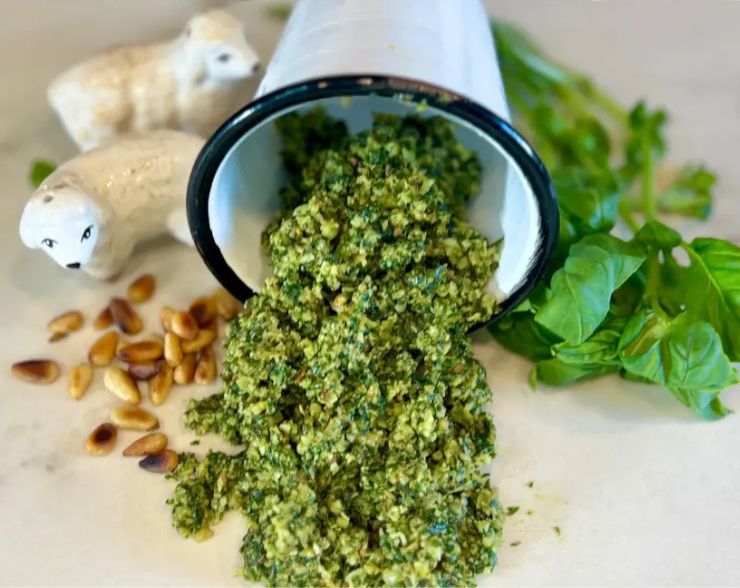
Homemade Basil Pesto

A Traditional Sauce From Genoa

Pesto may be simple, but it has a long history rooted in Genoa, the capital of Italy’s Liguria region. Its name comes from the Genoese word meaning “to pound” or “to crush,” referring to the traditional method of grinding the ingredients together with a marble mortar and wooden pestle.

Traditional Pesto Genovese is made with fresh basil, extra-virgin olive oil, garlic, pine nuts, salt, Parmesan, and pecorino cheese. Those few ingredients create the fresh, fragrant sauce that eventually became popular far beyond Italy. The Pesto Genovese Consortium still recognizes these as the ingredients of authentic Genovese pesto.

While a mortar and pestle may be the traditional way to prepare it, a food processor makes homemade pesto much more practical. The important part is using fresh ingredients and processing them only until they come together so the basil retains its beautiful color and flavor.

Why Homemade Pesto Is Worth Making

Fresh basil pesto has a flavor that is difficult to capture in a shelf-stable jar. You taste the basil, freshly grated cheese, toasted pine nuts, garlic, and extra-virgin olive oil individually, but they also work together to create a rich and vibrant sauce.

Making pesto at home also gives you complete control over its flavor and consistency. You can use two garlic cloves for a milder pesto or three if you want that garlic flavor to stand out. Begin with ¼ cup of olive oil for a thick spread and gradually add up to ½ cup when you want a looser sauce for pasta or drizzling.

It is also a wonderful way to preserve an abundance of summer basil. Make several batches while basil is plentiful and freeze the extra so you can enjoy that fresh garden flavor long after summer has ended.

What Is Really in That Jar of Store-Bought Pesto?

One of the main reasons I make pesto at home is the oil. Traditional pesto is made with extra-virgin olive oil, but many store-bought varieties use highly refined soybean or sunflower oil as the primary oil. These are the same heavily processed seed oils I try to keep out of my kitchen, especially because they are already found in so many packaged and processed foods.

For example, Classico Traditional Basil Pesto lists soybean oil before olive oil. The jar may have olive oil in it, but soybean oil is the predominant oil. It also contains natural flavor and sulfites.

Barilla Rustic Basil Pesto uses sunflower oil rather than making extra-virgin olive oil the foundation of the sauce. It also contains spinach, cashews, potato flakes, lactic acid, yeast extract, and natural basil flavor.

Spinach is not an unhealthy ingredient. That is not the issue. The issue is that it can be used as an inexpensive green filler in something being sold as basil pesto. Cashews may replace traditional pine nuts, while potato flakes help produce a thick texture without using as much basil, cheese, or nuts. Natural basil flavor can then strengthen the flavor that should have come from plenty of fresh basil.

Not every brand uses the same formula, which is why reading the ingredient list is so important. Do not assume a green sauce labeled “basil pesto” is made primarily with basil and extra-virgin olive oil. Look for the type of oil used, where olive oil appears on the list, and whether the pesto contains fillers, cheaper nut substitutions, added flavors, or preservatives.

Homemade pesto gives us exactly what pesto should contain: fresh basil, toasted pine nuts, real Parmesan, garlic, salt, and extra-virgin olive oil. No refined seed oils, no green fillers, no potato flakes, and no added flavoring.

Keeping Pesto Fresh and Green

Fresh pesto naturally begins to darken when it is exposed to air. This does not mean it has spoiled, but you can slow the discoloration by transferring it to a small airtight container, smoothing the surface, and covering the top with a thin layer of olive oil.

Keep homemade pesto refrigerated and use it within five to seven days. For longer storage, freeze it in small containers or ice-cube trays. Once the cubes are frozen, transfer them to a freezer-safe container so you can remove only the amount you need.


Homemade Basil Pesto

Fresh homemade basil pesto combines fragrant basil, toasted pine nuts, garlic, Parmesan cheese, and extra-virgin olive oil in a vibrant, flavorful sauce. Use it with pasta, spread it on sandwiches, spoon it over chicken or vegetables, or stir it into soups and sauces.
Prep Time 10 minutes
Course Appetizer, condiment, dinner
Cuisine European, Italian, Mediterranean
Servings 1 cup

Equipment

  • food processor

Ingredients
  

  • 3 cups fresh basil leaves, removed from stems
  • 1/4 cup pine nuts toasted
  • 2-3 cloves of garlic
  • 1/2 cup Parmesan cheese freshly grated
  • 1/4 tsp Kosher salt + some on hand to adjust the taste
  • 1/8 tsp ground pepper, I like my mixed pepper blend
  • 1/4-1/2 cup extra-virgin olive oil, depending on your desired consistency

Instructions
 

  • Toast the pine nuts in a dry skillet over medium-low heat for 3–5 minutes, stirring frequently, until lightly golden and fragrant. Immediately transfer them to a plate and let them cool.
    Add the basil, cooled pine nuts, garlic, Parmesan, kosher salt, and pepper to a food processor. Pulse several times until finely chopped, stopping to scrape down the sides of the bowl as needed.
    With the food processor running on low, slowly drizzle in ¼ cup of the olive oil. Continue adding more, a little at a time, until the pesto reaches your desired consistency. Use less oil for a thick spread or dip and closer to ½ cup for tossing with pasta or drizzling over food.
    Taste and adjust the salt and pepper as needed. Use immediately or transfer the pesto to a clean jar or airtight container.

Notes

  • Use freshly grated Parmesan rather than pre-shredded cheese, which does not blend as smoothly.
    Make sure the basil is completely dry before processing. Water clinging to the leaves can make the pesto watery and shorten its storage life.
    Avoid processing the pesto longer than necessary. The heat created by the food processor can darken the basil and dull its fresh flavor.
    Pesto will naturally darken when exposed to air. Smoothing the top and covering it with a thin layer of olive oil can help preserve its bright color.

Storage

  • Store the pesto in an airtight container in the refrigerator for up to 5–7 days. For longer storage, freeze it in small containers or ice-cube trays for up to 6 months.
Keyword fresh, quick, sauce, versatile
Tried this recipe?Let us know how it was!