
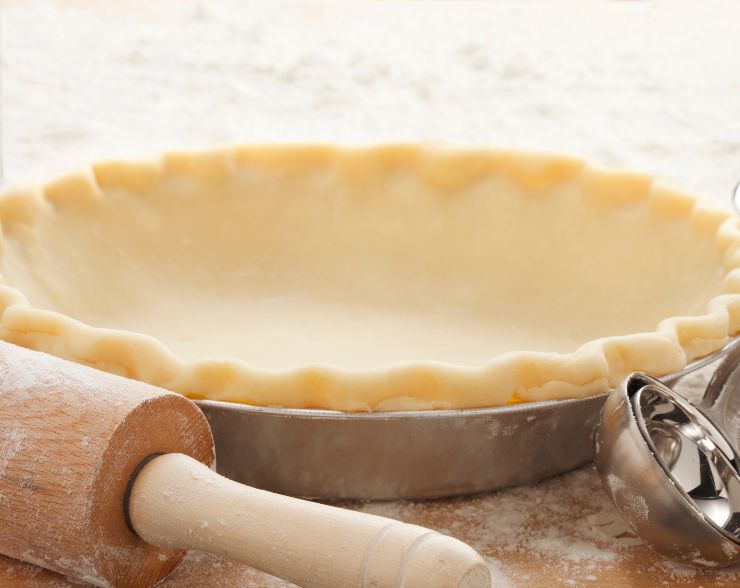
Perfect All-Butter Pie Crust (Single 9-Inch Crust)
A reliable all-butter pie crust that’s flaky, flavorful, and designed with beginners in mind. This single 9-inch crust can be made by hand or in the food processor, with step-by-step guidance so you get consistent results every time. Great for Thanksgiving pies, quiches, and any recipe that calls for a buttery homemade crust.
Ingredients
- 1¼ cups un bleached all-purpose flour
- 1/2 tsp kosher salt
- 1 tsp pure cane sugar
- 8 tbsp (1 stick) cold unsalted butter, cut into ½-inch cubes
- 3-5 tbsp ice water
Instructions
- 1. Prepare your ingredients (the colder, the better).Place the flour, cubed butter, and even your mixing bowl in the fridge for 10–15 minutes.Why: Cold fat melts slower in the oven, creating steam pockets that make the crust flaky.
- 2. Combine the dry ingredients.In a medium bowl, whisk together the flour, salt, and sugar.Visual cue: The mixture should look evenly combined, no clumps.
- 3. Cut in the butter until you see “pea-sized” pieces.Add the cold butter to the flour mixture.Using a pastry cutter or your fingertips, press and cut the butter into the flour until the mixture looks like coarse crumbs with visible pieces of butter about the size of peas.Why: Those small butter pieces melt in the oven and form layers.What you’re looking for: A mix of small crumbs and a few larger flat pieces.
- 4. Add the water slowly — 1 tablespoon at a time.Sprinkle 1 tablespoon of ice water over the dough and gently toss with a fork.Repeat with more water, one tablespoon at a time, until the dough just starts to clump together.Stop when:You can pinch a small handful and it holds together,But the dough is not sticky or wet.Most people need about 4 tablespoons.
- 5. Bring the dough together gently.Turn the mixture onto a lightly floured surface.Use your hands to press and fold it just until it forms a smooth ball.Important: Do not knead — overworking develops gluten and makes the crust tough.Flatten into a 1-inch thick disc.
- 6. Chill the dough so it relaxes.Wrap the disc tightly in plastic wrap or a reusable wrap.Refrigerate for at least 1 hour (and up to 3 days).Why: Resting relaxes the gluten and firms up the butter, preventing shrinking.
- 7. Roll the dough into a 12-inch circle.Lightly flour your counter and rolling pin.Start from the center and roll outward, turning the dough a quarter turn every few rolls.Visual cues:Even thickness, about ⅛ inch.Smooth edges, no cracking.If cracks appear, let the dough warm for 2–3 minutes and continue.
- 8. Transfer the dough to the pie plate.Gently drape the dough over your rolling pin and unroll it into a 9-inch pie plate.Lift the edges and ease the dough down into the corners — don’t stretch it.Trim excess dough to a ½-inch overhang and fold or crimp as desired.
- 9. Blind bake if your recipe requires it.For custard pies, cream pies, or no-bake fillings:Chill the crust in the freezer for 10 minutes.Line with parchment and fill with pie weights.Bake at 375°F for 15 minutes.Remove weights and bake 12–15 minutes more, until golden.
Tips for First-Time Success
- Warm dough cracks. If the dough cracks constantly, it’s too cold — let it rest a couple minutes.Sticky dough spreads. If it sticks to your counter, dust lightly with flour and work quickly.Visible butter = flaky crust. If you can see little specks of butter, you’ve done it right.Overworking is the biggest mistake. Touch the dough as little as possible.
Tried this recipe?Let us know how it was!