
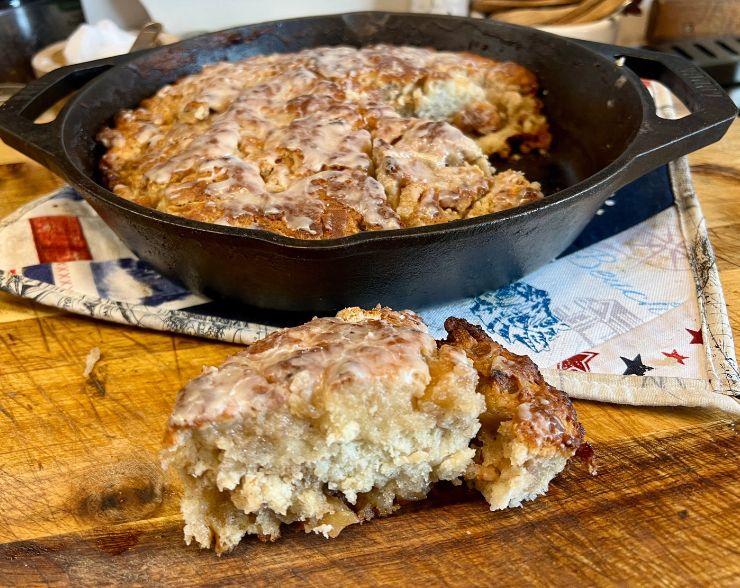
Apple Fritter Butter-Swim Biscuits

These Apple Fritter Butter-Swim Biscuits combine the cozy, cinnamon-spiced flavor of a classic apple fritter with the rich, buttery goodness of butter-swim biscuits. Filled with tender apples and baked in a pool of butter, they have irresistibly crisp, golden edges, a soft and moist center and a light vanilla glaze.
Ingredients
Cinnamon Apples
- 2 cups peeled cored and finely diced firm baking apples, such as Granny Smith, Honeycrisp, Pink Lady or Braeburn
- 2 tablespoons butter
- 2 tablespoons packed brown sugar
- 1 teaspoon ground cinnamon
- 1 teaspoon vanilla extract
Biscuit Dough
- 300 grams 2½ cups all-purpose flour
- ¼ cup cane sugar
- 1 tablespoon baking powder
- ¾ teaspoon Diamond Crystal kosher salt
- 1½ –2 cups buttermilk as needed
- 1 stick butter
Vanilla Glaze
- ½ cup powdered sugar
- 1-2 tablespoons milk
- ¼ teaspoon vanilla extract
Instructions
- Heat the oven to 425°F.
- Melt 2 tablespoons butter in a 10-inch cast-iron skillet over medium heat. Add the diced apples, brown sugar and cinnamon. Cook for 3–5 minutes, stirring frequently. The apples should begin to soften but still hold their shape. Remove the skillet from the heat, stir the vanilla into the apples and transfer the apples and all their juices to a bowl.
- Place 1 stick of butter in the empty skillet. Put the skillet in the hot oven for 3–5 minutes, or just until the butter has completely melted.
- While the butter melts, whisk together the flour, cane sugar, baking powder and kosher salt in a large mixing bowl. Measure 2 cups of buttermilk, but keep it separate from the dry ingredients for now. Once the buttermilk is added, the baking powder begins working, so the biscuit mixture should be made only after the skillet is ready.
- Carefully remove the hot skillet from the oven and place it on a heat-safe surface. Remember that the skillet and its handle will be extremely hot.
- Pour 1½ cups of the buttermilk into the dry ingredients and stir gently until most of the flour is moistened. Fold in the cooked apples and all their juices.
- Add the remaining buttermilk a little at a time, gently stirring after each addition. Stop adding buttermilk when the mixture is wet, thick and gloopy. It should be much softer and wetter than traditional biscuit dough, but it should not be thin or easily pourable. Because some apples release more juice than others, you may not need the entire 2 cups of buttermilk. Do not overmix.
- Spoon the biscuit mixture into the skillet directly over the melted butter. Do not stir the butter into the dough. Gently spread the mixture to the edges of the skillet; the butter will rise around the sides and may flow over parts of the top.
- Use a knife to score the unbaked biscuit mixture into 8 wedges. Scoring it before baking makes the finished biscuits easier to separate.
- Bake for 12 minutes. Carefully rotate the skillet, then bake for another 8–13 minutes. Begin checking after a total of 20 minutes. The biscuits are done when the top is golden brown and a toothpick inserted into the center does not have wet dough on it. Moist crumbs or apple juices on the toothpick are fine.
- Let the biscuits cool in the skillet for about 10 minutes.
- While they cool, whisk together the powdered sugar, 1 tablespoon milk and vanilla. If the glaze is too thick to drizzle, add more milk a small amount at a time. Drizzle the glaze lightly over the warm biscuits.
- Cut along the scored lines and serve warm.
Tried this recipe?Let us know how it was!