
One Bottle, One Ingredient
Balsamic glaze is one of those things I’ve made at home for so long that I honestly never thought much about buying it. I pour balsamic vinegar into a saucepan, keep the heat low, and let it slowly reduce until the flavor is concentrated and the vinegar becomes rich and glossy.
Then I started looking at the ingredient lists on the bottles of prepared balsamic glaze at the grocery store. Every one I’ve found contains caramel color, and many also include ingredients like modified cornstarch and xanthan gum.
Meanwhile, making it at home requires exactly one ingredient: balsamic vinegar.
There’s no need to add sugar or thickeners. As the vinegar reduces, its own flavors and natural sweetness become concentrated, giving you that beautiful sweet-tart flavor and syrupy consistency.
Don’t Buy the Most Expensive Bottle
You don’t need a beautifully aged, expensive balsamic vinegar to make a good glaze. In fact, I’d save that bottle for drizzling straight from the bottle where you can really appreciate it.
For a reduction, the ingredient list matters more to me than the price tag.
Look for balsamic vinegar made with grape must and wine vinegar or red wine vinegar. That’s perfectly fine for making a glaze. Grape must is the juice from freshly crushed grapes, and it brings the natural sugars and grape flavor that become more concentrated as the vinegar reduces.
What I don’t want to see is caramel color. We’re going to naturally develop that deep, dark color by reducing the balsamic, so there’s simply no need for it.
Turn the bottle around and read the label. You may find that a relatively inexpensive bottle has exactly the ingredients you’re looking for.
Low and Slow Makes a Better Glaze
There’s no reason to rush a balsamic reduction. I prefer keeping it over low heat at a gentle simmer and giving the water time to slowly evaporate.
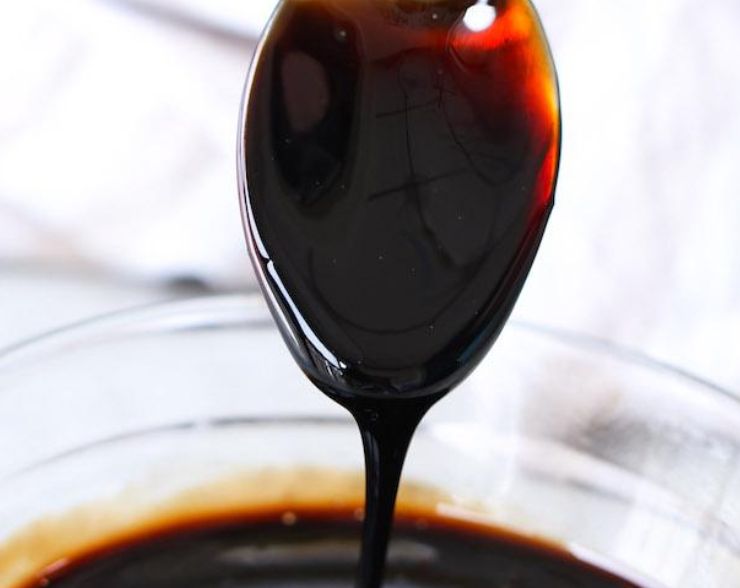
As it reduces, you’ll notice the change. The aroma becomes richer, the bubbles change, and eventually the balsamic begins lightly coating a spoon rather than immediately running off.
A 16-ounce bottle starts as 2 cups of balsamic vinegar and will give you roughly ¾ to 1 cup of finished glaze, depending on how far you take the reduction.
The time can vary with your saucepan and stove, but around 30–45 minutes is a good expectation. Let the consistency—not the clock—tell you when it’s ready.
Remember, It’s Going to Thicken
This is the one place where it’s easy to take balsamic glaze too far.
What you’re looking at in the saucepan isn’t the final consistency. Balsamic glaze thickens considerably as it cools.
Take it off the heat while it still flows easily and looks a little thinner than you ultimately want. Once cooled, it develops that thick, glossy consistency that’s perfect for drizzling.
If you do accidentally take it a little too far, it isn’t ruined. Gently warm it again with a small amount of water to loosen it back up.
More Than a Salad Drizzle
A bottle of homemade balsamic glaze in the refrigerator can do a lot more than finish a salad.
It’s wonderful over fresh tomatoes and mozzarella, roasted vegetables, pizza, grilled chicken, pork or steak. And don’t forget fruit—strawberries, peaches and figs are especially good with that concentrated sweet-tart balsamic flavor. A little drizzle over vanilla ice cream isn’t a bad idea either.
For something that adds so much flavor to a finished dish, it doesn’t get much simpler: one carefully chosen bottle of balsamic vinegar and a little patience.
Homemade Balsamic Glaze
Ingredients
- 16 oz balsamic vinegar
Look for a balsamic vinegar with a simple ingredient list. Grape must with wine vinegar or red wine vinegar is perfectly fine. Avoid balsamic vinegar with added caramel color. You don't need an expensive bottle—the ingredient list matters more than the price.
Instructions
- Pour the balsamic vinegar into a medium saucepan.Bring to a very gentle simmer over low heat. Let the vinegar slowly reduce, stirring occasionally, until reduced by about half and it lightly coats the back of a spoon, about 30–45 minutes.Remove from the heat while the glaze is still a little thinner than you want it. It will thicken considerably as it cools.Cool completely, then transfer to a jar or bottle.
Notes
- Choosing your balsamic: You don't need an expensive balsamic vinegar for making a glaze. Read the ingredient label instead. Grape must combined with wine vinegar or red wine vinegar is fine; avoid bottles containing caramel color.Don't over-reduce it: The glaze will look thinner while it's hot. If you cook it until it's thick and syrupy in the saucepan, it may become much too thick once cool.If it gets too thick: Gently reheat it with a small amount of water until it returns to the consistency you want.
