
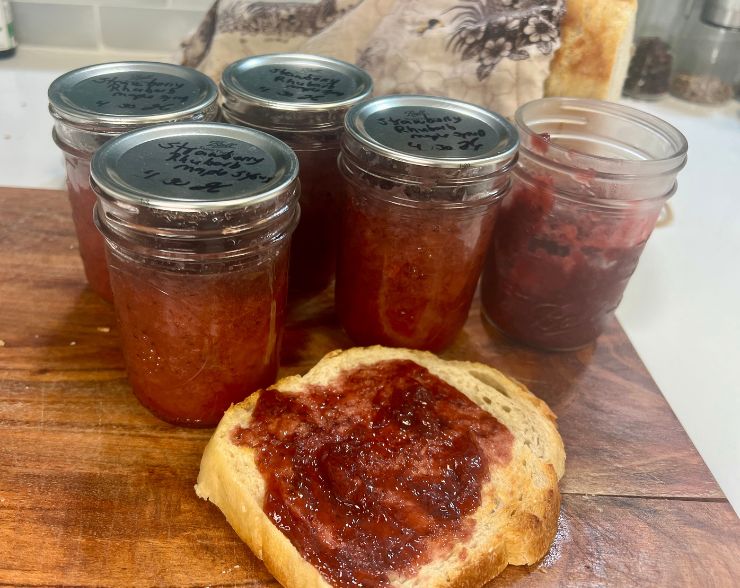
Strawberry Rhubarb Jam (Low Sugar + Sugar Alternatives)

This strawberry rhubarb jam is bright, balanced, and not overly sweet. Using Pomona’s Universal Pectin allows you to reduce the sugar or use alternatives like honey or maple syrup while still getting a proper set.
Equipment
Ingredients
- 4 cups chopped strawberries
- 2 cups chopped rhubarb
- 1/2-1 cup sweetener of choice(honey, maple syrup, date sugar, or pure cane sugar)
- 2 tsp lemon juice
- 2 tsp calcium water (from Pomona’s kit)
- 3 tsp Pomona’s pectin powder
Instructions
Before You Begin
Wash your jars, lids, and rings with warm soapy water and rinse well.Place the jars in a pot of hot water to keep them warm until you are ready to fill them.Fill your water bath canner and begin heating the water so it is hot and ready when your jam is finished.Prepare the calcium water according to the instructions that come with your Pomona’s pectin and set it aside.Step 1. Cook the fruit
Place the chopped strawberries and rhubarb into a large pot.Set the pot over medium heat. As the fruit begins to warm, it will release liquid. Stir occasionally to prevent sticking.As the rhubarb softens, use a potato masher to gently break down the fruit. Continue cooking and mashing until the rhubarb is fully softened and there are no firm pieces left. The mixture should look juicy and partially mashed.Step 2. Add calcium water and bring to a full boil
Stir in the calcium water.Increase the heat and bring the mixture to a full rolling boil. This means the mixture is boiling vigorously and continues to boil even when you stir it. This step is important for the jam to set properly.Step 3. Mix the pectin and sweetener
In a separate bowl, combine the pectin powder with your chosen sweetener. Mix thoroughly until there are no dry clumps. This step helps the pectin dissolve smoothly into the jam.Step 4. Add the pectin mixture
Once the fruit is at a full rolling boil, pour in the pectin and sweetener mixture while stirring constantly.Continue stirring for 1 to 2 minutes and allow the mixture to return to a full rolling boil. The jam will begin to thicken slightly.Remove the pot from the heat.Step 5. Fill the jars
Carefully ladle the hot jam into your warm jars, leaving 1/2 inch of space at the top.Use a clean utensil to remove any air bubbles by gently running it along the inside edge of the jar.Wipe the rims of the jars with a clean, damp cloth.Place the lids on top and screw the rings on until they are fingertip tight, meaning just snug, not overly tightened.Step 6. Process the jars
Place the filled jars into the water bath canner. The water should cover the jars by at least 1 to 2 inches.Bring the water to a full boil. Once boiling, process the jars for 10 minutes.When the time is up, turn off the heat and let the jars sit in the water for 5 minutes.Step 7. Cool and check seals
Remove the jars and place them on a towel. Let them sit undisturbed for 12 to 24 hours.After cooling, check the seals by pressing the center of each lid. The lid should not move.Remove the rings before storing the jars.
Storage
- Store sealed jars in a cool, dark place. Once opened, refrigerate and use within a few weeks.
Sweetener Notes
- Cane sugar will give you the most traditional jam texture and sweetness.Honey creates a smooth texture with a light, floral flavor.Maple syrup adds a deeper, richer flavor and may result in a slightly softer set.Date sugar produces a more rustic texture and is less sweet than other options.
Notes
- This recipe is written specifically for Pomona’s pectin, which uses calcium instead of sugar to create a gel.Because of this, you can reduce the sugar or use alternative sweeteners like honey, maple syrup, date sugar, or cane sugar.Other pectins require different sugar amounts and methods and are not interchangeable in this recipe.
Tried this recipe?Let us know how it was!