
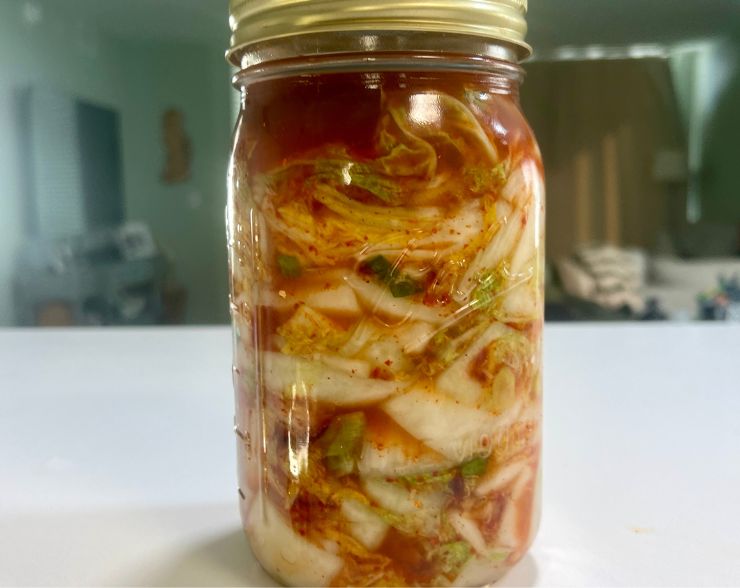
Easy Fermented Kimchi

This easy fermented kimchi is a simplified, approachable version you can make at home with everyday ingredients. It uses real fermentation to develop tangy, complex flavor while remaining forgiving for first-time fermenters. Crisp napa cabbage is salted, mixed with a savory chili-garlic paste, and fermented until bubbly and flavorful.
Equipment
- fermenting weight
Ingredients
- 1 medium napa cabbage (about 2–2½ pounds)
- 1/4 cup Diamond Crystal kosher salt If using Redmond Real Salt: use 3 tablespoons (it is denser and saltier by volume)
- Filtered water, as needed
For the kimchi paste
- 1 tbsp fresh ginger
- 4-6 garlic, finely minced
- 1-3 tbsp gochugaru (Korean red pepper flakes), to taste
- 2 tbsp fish sauce
- 1 tbsp raw and unfilterd honey (optional, helps kick-start fermentation)
Vegetables
- 2-4 scallions, chopped
- 1 medium carrot, julienned
- 1 small daikon radish, julienned (optional)
Instructions
1. Salt the cabbage
Remove and discard the core from the napa cabbage. Cut the cabbage into 1½–2 inch pieces.Place the cabbage in a large bowl. Sprinkle evenly with the salt and gently rub and turn the cabbage for about 1 minute to distribute the salt.Add enough filtered water to just cover the cabbage. Place a plate on top to keep the cabbage submerged.Let sit for 1½–2 hours, turning every 30 minutes, until the cabbage is flexible and has released liquid.2. Make the paste (while the cabbage soaks)
In a bowl, mix the ginger, garlic, gochugaru, fish sauce, and honey until a thick paste forms.Taste and adjust heat. The paste should taste bold and slightly salty.3. Rinse and drain
Drain the cabbage and rinse thoroughly 2–3 times with cold water to remove excess salt.Drain well, gently squeezing out excess liquid without crushing the cabbage.4. Combine
Add the scallions, carrot, and daikon (if using) to the drained cabbage.Add the kimchi paste and mix thoroughly using clean hands, coating everything evenly.5. Pack the jar (press as you go)
Pack a small amount of kimchi into a clean quart jar, then press it down firmly to remove air pockets. Continue packing and pressing in layers.You can use your fist or a kraut pounder to work out trapped air and draw liquid to the surface.Reserve one clean outer cabbage leaf and place it over the surface of the kimchi to create a barrier. Place your fermentation weight on top of the leaf to keep everything submerged.Leave at least 1 inch of headspace. Wipe the rim clean and loosely cap the jar or use a fermentation lid.6. Ferment (slow and steady)
Place the jar on a plate at room temperature, ideally 65–72°F.Do not disturb for the first 4–5 days.Begin tasting at day 5. Most batches are ready between 5–7 days, depending on temperature and your preferred level of tang.7. Refrigerate
Once fermented to your liking, transfer the jar to the refrigerator. Flavor will continue to deepen over time while fermentation slows.
Notes
- Gochugaru can be used anywhere you would normally use red chili flakesThis is an accessible, home-friendly method designed for reliable fermentationKimchi keeps refrigerated for several months and becomes more sour over time
Tried this recipe?Let us know how it was!