
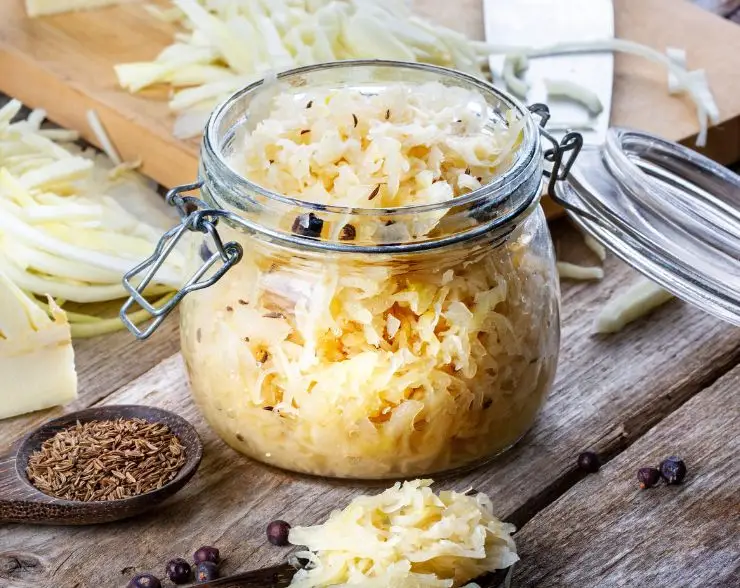
Homemade Sauerkraut
Crunchy, tangy, and packed with probiotics — this homemade lacto-fermented sauerkraut is as traditional as it gets. With just cabbage, salt, and time, you’ll create a naturally preserved food that supports gut health and adds flavor to any meal. Simple ingredients, no special equipment, and a reliable method that works every time.
Equipment
- Large mixing bowl
- Sharp knife or mandoline
- Wide-mouth glass jar or fermentation crock
- Kraut pounder or clean fist (for packing cabbage)
- Weight to keep cabbage submerged (glass fermentation weight, small jar, or a clean rock wrapped in plastic)
- Clean cloth and rubber band, or a pickle pipe, or an airlock fermentation lid
Ingredients
- 1 medium head cabbage (about 2–3 lbs)
Salt — choose your method:
- Estimate Method: 1–1.5 tablespoons sea salt or Redmond Real Salt (non-iodized) for a medium head of cabbage.
- Exact Method: Weigh the shredded cabbage, then use 2% salt by weight.
Optional flavor add-ins (per quart jar):
- Seeds & spices (caraway, dill seed, juniper, mustard seed, peppercorns): 1–2 teaspoons
- Fresh herbs (dill weed, thyme, rosemary): 1–2 tablespoons chopped
- Garlic: 1–2 cloves, sliced or smashed
- Fruits (apple slices, blueberries): ½ cup
- Vegetables (onion, carrot, beet strips, hot peppers): ½ cup
Instructions
- Prep the cabbage — Remove any damaged outer leaves, keeping 1–2 clean whole leaves for later. Cut cabbage into quarters, remove the core, and slice thinly with a knife or mandoline.Add salt — Sprinkle your estimated amount (1–1.5 tablespoons) over the cabbage, or weigh and calculate exactly using 2% salt by weight. Sprinkle evenly over the cabbage.
- How to calculate: Multiply the weight of your shredded cabbage in grams by 0.02.Example: 1,200 g cabbage × 0.02 = 24 g salt.
- Massage — Use clean hands to massage the salt into the cabbage for 5–10 minutes, until it starts to soften and release liquid.Sweat the cabbage — Let the salted cabbage rest for 5–10 minutes, then massage again. Repeat this rest-and-massage process 2–4 times, depending on how much brine forms. You should have enough liquid to fully cover the cabbage once packed.Pack into jar — Transfer the cabbage and brine into a clean wide-mouth jar, pressing down firmly with a kraut pounder or your fist to remove air pockets and bring brine to the surface.Add leaf barrier & weight — Place the reserved whole cabbage leaves on top of the shredded cabbage, tucking in the edges. Set your fermentation weight on top of the leaves and press down firmly to keep everything submerged. The leaves act as a protective barrier, preventing small bits from floating.Cover — Use a cloth secured with a rubber band, a pickle pipe, or an airlock fermentation lid.Ferment — Store at room temperature (65–75°F) out of direct sunlight. Taste after 5 days; continue fermenting up to 3–4 weeks for deeper flavor, checking daily to ensure the cabbage stays submerged.Refrigerate — Once it tastes the way you like, remove the weight, seal with a lid, and store in the fridge. Will keep up to 12 months if submerged in brine.
Troubleshooting
- Floating cabbage? Push it back down and make sure it’s under the brine.White film on top? This is usually harmless kahm yeast — skim it off.Bad smell or mold? Toss it. Sauerkraut should smell pleasantly sour, not rotten.
Storage & Shelf Life
- Once fermented to your liking, refrigerate your sauerkraut. The cool temperature slows fermentation, and it can last for up to 12 months if kept submerged in brine and refrigerated.Best flavor & crunch: within 4–6 months.Always use a clean utensil and press the kraut back under the brine after serving.
Tried this recipe?Let us know how it was!