
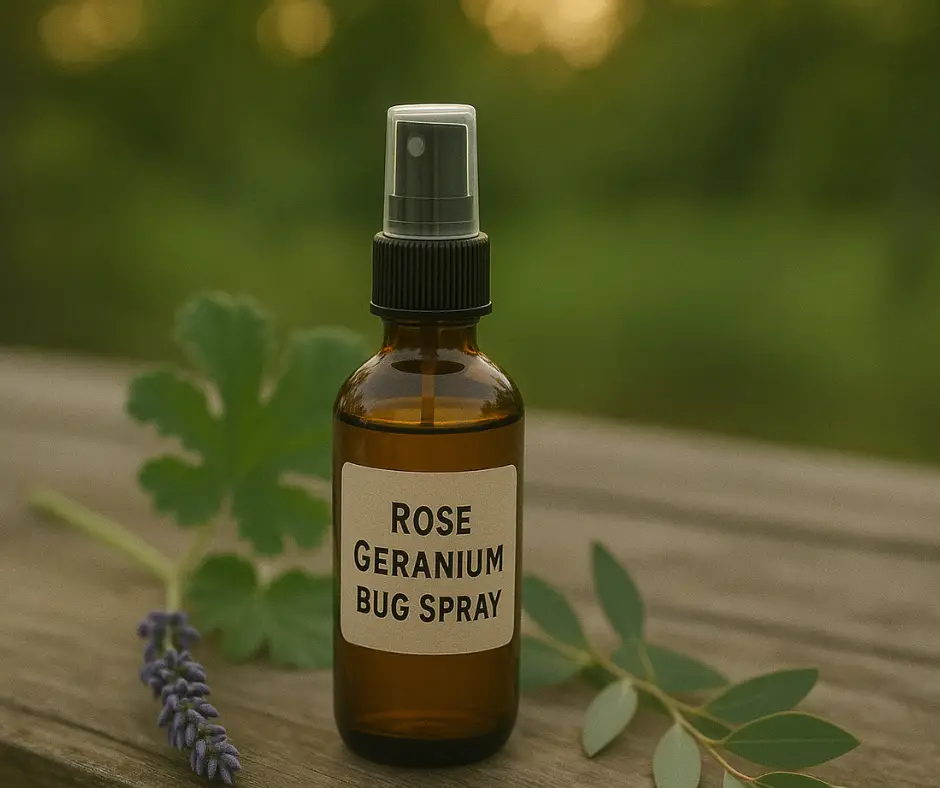
Keep Bugs at Bay Naturally with Rose Geranium Oil
A homemade spray to repel mosquitoes, fleas, ticks, and gnats — no chemicals needed.
Warm weather brings outdoor dinners, sunset walks, and — unfortunately — biting bugs. If you’re not into spraying yourself with mystery chemicals every time you go outside, you’re not alone. That’s why I keep a small bottle of homemade insect repellent in our pilothouse, back patio, and top deck.
It smells floral and fresh to us, but to pests like mosquitoes, fleas, gnats, and ticks, it’s a strong “no thanks.”
🌸 Why Rose Geranium Oil?
Rose geranium oil (from Pelargonium graveolens) contains citronellol and geraniol, two natural compounds that repel a wide range of biting insects. It’s been used for years as a gentle, non-toxic alternative to chemical repellents.
🦟 What It Helps Repel:
Mosquitoes
Gnats and no-see-ums
Fleas
Ticks (especially helpful for dogs)
Natural Flea & Tick Repellent for Dogs
Add 1–2 drops of rose geranium oil to your dog’s collar or harness before walks. You can also dilute it with a carrier oil (like jojoba or almond oil) and apply between their shoulder blades.
⚠️ Do NOT use essential oils on cats. Cats lack the liver enzymes to process them safely.
Why These Ingredients Matter
Witch Hazel
Acts as a natural carrier for the oils, so they mix and apply evenly. It’s gentle, fast-drying, and soothing for sun-exposed skin.
Glycerin or Vodka
Glycerin helps the scent cling to your skin and adds moisture. Coconut or vegetable-derived glycerin is a clean, skin-loving option.
Vodka works as a quick-drying preservative and helps blend the oils into the base.
Glass Bottle Only, Please
Essential oils can degrade plastic over time, causing harmful chemical leaching and funky smells. Use a glass spray bottle, preferably amber or cobalt to protect the oils from sunlight.
✅ Benefits of Vegetable Glycerin in Bug Spray:
Natural Humectant: It draws moisture to the skin, helping to counteract the drying effects of alcohol or witch hazel.
Helps Essential Oils Disperse: It acts as a mild emulsifier, helping essential oils mix better with water (though not fully dissolving them).
Skin Soother: It adds a soft, silky feel and can help reduce irritation from other stronger ingredients like citronella or eucalyptus.
Mild Preservative Boost: While not a full preservative, it can help extend shelf life slightly by discouraging microbial growth.
🌊 A Better Choice for Our Waterways
One of the reasons I like making my own bug spray is that we spend so much of our time outdoors and on the water.
While research is still ongoing, there are growing concerns about the environmental impact of some conventional insect repellents when they wash off into lakes, rivers, and coastal waters. Choosing a simple, plant-based spray made with thoughtfully selected ingredients is one small way to reduce the number of unnecessary chemicals we introduce into the environment.
For me, it goes beyond protecting our waterways. If I can choose simple ingredients I recognize over products made with long lists of synthetic chemicals, that’s usually the direction I prefer to go. I believe that what we put on our bodies—and what eventually ends up in our environment—both matter.
If you spend time boating, kayaking, paddleboarding, fishing, or swimming, it’s another reason I reach for a homemade option whenever possible. It gives me peace of mind knowing I’m making a choice that’s a little kinder to both my family and the places we love to enjoy.
Final Thoughts
This homemade spray has become a go-to in my home. It’s easy to make, smells great, and helps keep summer outings bug-free without harsh chemicals. Plus, it’s safe for the whole family — even the dog (just not the cat!).
Want more no-waste, natural solutions like this? Follow along for more homemade recipes that actually work — and smell like something you’d want to wear. Home
Keep Bugs at Bay Naturally with Rose Geranium Oil
Equipment
Ingredients
- 4 tbsp witch hazel (or distilled water with vodka)
- 10 drops rose geranium essential oil
- 5 drops lavender oil (optional, calming for skin)
- 5 drops lemon eucalyptus or citronella oil (optional, boosts repellent power)
- 1 tsp glycerin (or 1 tsp vodka)
- 3-5 drops tea tree essential oil (optional, helps support healthy skin and may provide a little extra insect-repelling benefit)
- Tip: For a skin-loving option, choose a vegetable or glycerin derived from coconut oil. It’s naturally moisturizing and often more eco-friendly than palm- or soy-based alternatives.
- Dark Amber Glass Spray Bottles 4 oz,
- 2 oz Mini Glass Spray Bottles,
- Glass Spray Bottle with Silicone Sleeve Protection,
Instructions
- Add all ingredients to a glass spray bottle.Shake well before each use.Spray on exposed skin, clothing, hats, or gear.Reapply every 2–3 hours or after swimming.
Why These Ingredients Matter
Witch Hazel
Acts as a natural carrier for the essential oils so they apply more evenly. It’s gentle on the skin, dries quickly, and can feel refreshing on warm days.Glycerin or Vodka
Vegetable glycerin helps the scent cling to your skin a little longer while adding a touch of moisture. Coconut-derived glycerin is a great natural option.Vodka helps disperse the essential oils and dries quickly, making the spray feel lighter on the skin.Rose Geranium Essential Oil
One of the most popular essential oils used in homemade bug sprays. It has a pleasant floral scent while helping discourage mosquitoes and other biting insects.Lemon Eucalyptus or Citronella Essential Oil
These are the primary insect-repelling oils in this recipe. Lemon eucalyptus is especially well known for helping repel mosquitoes, while citronella has long been a favorite natural choice for outdoor use.Lavender Essential Oil
Adds a fresh scent and is traditionally used to help soothe and comfort the skin.Tea Tree Essential Oil
Tea tree oil is best known for supporting healthy skin because of its natural cleansing properties. While it isn’t as effective a repellent as lemon eucalyptus or citronella, it may provide a little extra insect-deterring benefit and can be a nice addition if you do get an occasional bug bite.Glass Bottle Only, Please
Essential oils can break down certain plastics over time, potentially causing unwanted odors and chemical leaching. Store your bug spray in a glass bottle—amber or cobalt blue is best—to help protect the essential oils from sunlight and keep the spray fresh longer.
