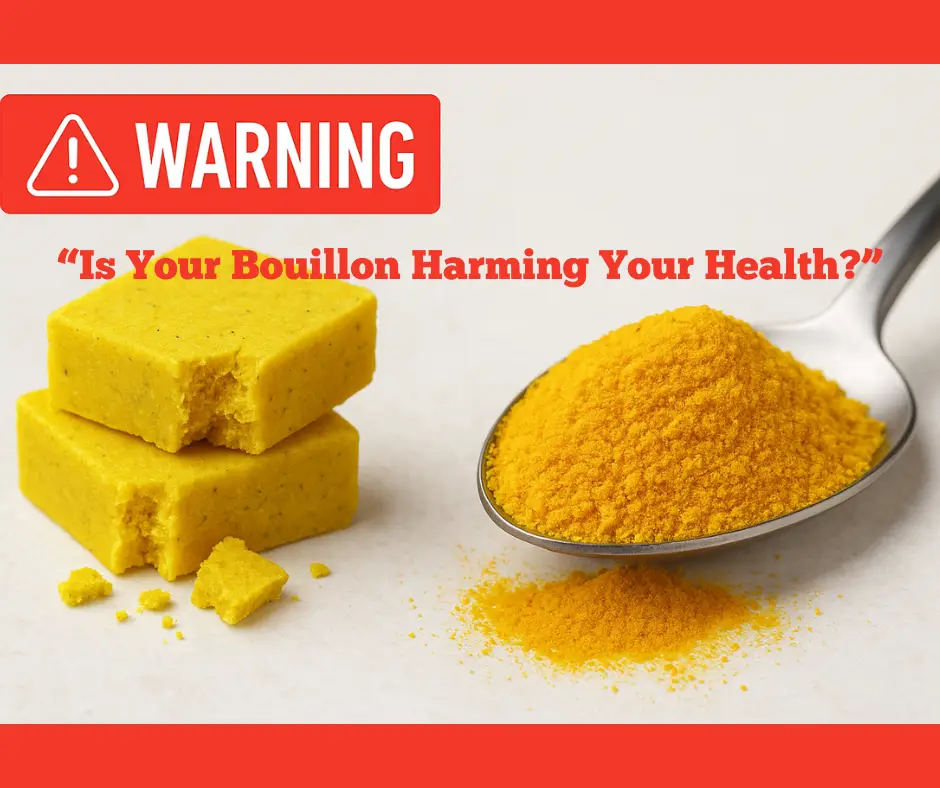
The Hidden Dangers of Powdered Bouillon and Cubes
What You Need to Know Before You Season
Bouillon cubes and powders are beloved for their convenience. They make it easy to turn a pot of water into something that tastes like it simmered for hours. But behind that small cube lies a long list of ingredients—and potential risks—that many home cooks overlook.
In this article, we’ll unpack the hidden dangers of bouillon powders and cubes, especially when used regularly, and offer simple alternatives to help you season smarter.
What’s Really Inside That Cube?
Many powdered bouillons and cubes contain far more than just dehydrated broth. Here are some common ingredients you’ll find:
Monosodium Glutamate (MSG) – Used as a flavor enhancer, MSG can cause sensitivity reactions in some individuals, including headaches, bloating, or dizziness.
Artificial Flavorings – Lab-created chemicals designed to mimic natural flavors.
Hydrogenated Oils – Still found in some bouillon products, these trans fats are known contributors to heart disease.
Color Additives – Including Yellow 5, caramel coloring, or other artificial dyes to simulate a “rich” broth look.
Anti-caking Agents – Added to prevent clumping, but they bring no benefit to the flavor or nutritional value.
🧂 Sodium Overload: What You’re Really Consuming
One of the most alarming ingredients in bouillon is sodium chloride—the technical name for table salt.
In bouillon, sodium chloride is used in large amounts to intensify flavor and act as a preservative. Just one bouillon cube or tablespoon of powder can contain between 900 to 1,200 mg of sodium—nearly half the recommended daily limit.
The American Heart Association recommends:
No more than 2,300 mg of sodium per day
Ideally, 1,500 mg per day for most adults
Too much sodium chloride has been linked to:
High blood pressure
Stroke and heart disease
Kidney stress
Fluid retention
Bone calcium loss
This is especially problematic when bouillon is layered into dishes with other salty components, like cured meats, cheeses, or canned vegetables, pushing sodium levels even higher.
Flavor vs. Nutrition
Lack of Nutritional Value
Bouillon cubes and powders are created for flavor—not nutrition. They typically offer little to no beneficial nutrients, and relying on them instead of real, whole ingredients can lead to a less balanced diet.
Looking for nourishment and flavor? Try cooking with:
Fresh herbs
Vegetables
Homemade stocks from bones or veggie scraps
These ingredients add complexity and nutrition without relying on artificial shortcuts.
Misleading Labels
Some bouillon products are marketed with health-conscious labels like:
“Low Sodium”
“Natural”
“Organic”
But these terms can be misleading.
“Low sodium” often still means hundreds of milligrams per serving.
“Natural” doesn’t mean free from additives, preservatives, or flavor enhancers.
“Organic” doesn’t guarantee a low-sodium or MSG-free product.
The bottom line: read the full ingredient list, not just the front of the box.
Risk for Vulnerable Populations
Certain groups should be especially cautious with bouillon:
Children: Small bodies are more sensitive to high sodium intake, which can raise blood pressure early.
Pregnant women: Excess sodium can worsen water retention and elevate blood pressure—both of which can affect pregnancy.
People with chronic conditions: Those managing hypertension, heart disease, or kidney problems are advised to drastically limit sodium and avoid processed flavorings like bouillon.
What seems like a harmless kitchen staple could be a health concern for the people who need to watch what they eat most closely.
✅ Healthier Alternatives
If you’re looking for smarter seasoning choices, here are a few flavorful, nutrient-conscious alternatives:
Homemade Broth or Stock
Use bones, vegetable trimmings, mushroom stems, or herb stems. Simmer them low and slow for a rich, natural flavor—then freeze in batches for easy use.
Herb & Spice Blends
Mix your own blends with garlic powder, onion powder, thyme, smoked paprika, turmeric, and salt-free seasoning blends. These offer vibrant taste without hidden chemicals.
Low-Sodium Store-Bought Broths
Look for broths with clear labels and fewer than 400 mg of sodium per cup. Bonus points for organic and no added sugars or flavor enhancers.
Miso Paste
A probiotic-rich seasoning with incredible depth, miso is perfect for soups, sauces, and marinades.
Homemade Bouillon Cubes (from Real Ingredients)
Skip the preservatives and make your own bouillon using fresh vegetables, chicken, herbs, and natural seasonings—then freeze in cubes for quick use.
👉 The full recipe is included below!
🌱 Final Thoughts from the Galley
At Gari’s Galley, we believe flavor shouldn’t come at the cost of your health. Bouillon cubes may be small, but their impact can be big—especially over time.
Understanding what goes into your food empowers you to make better choices. So next time you reach for a bouillon cube, take a moment to read the label—and consider what you’re really adding to your dish.
Sometimes the best flavor comes from what you leave out.