
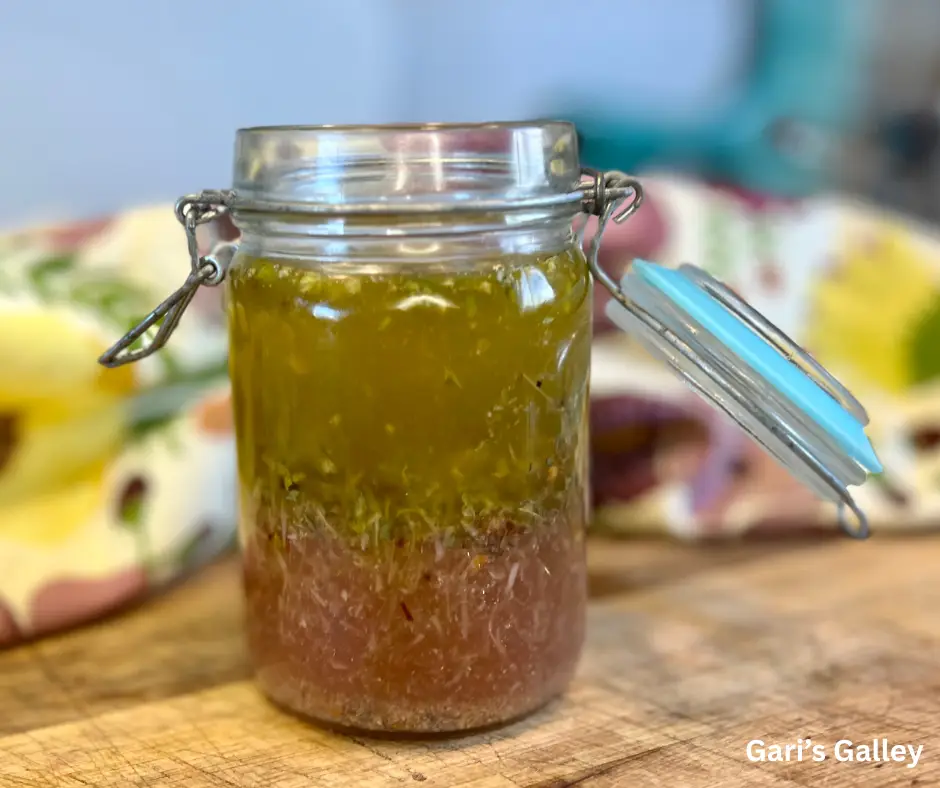
Italian Vinaigrette
Italian vinaigrette is a versatile condiment that enhances a wide range of dishes. Its primary use is as a salad dressing, bringing out the freshness of greens and vegetables. However, it can also be used in various ways
Ingredients
- 1/2 tsp Kosher salt
- 1/4 tsp Dried thyme
- 1/4 tsp Red pepper flakes
- 1/4 tsp Freshly cracked black pepper
- 1/2 tsp Garlic powder
- 1/2 tsp Onion powder
- 1/2 tsp Dried basil
- 1/2 tsp Dried oregano
- 1 tbsp Lemon juice
- 1 tbsp Honey
- 1 tsp Doijon mustard Optional
- 1/4 cup Freshly grated Parmesan cheese
- 1/4 cup Red wine vinegar
- 1/4 cup White wine vinegar
- 3/4 cup Extra virgine olive oil
Instructions
- 1. In a medium bowl or jar, combine the kosher salt, dried thyme, red pepper flakes, black pepper, garlic powder, onion powder, dried basil, and dried oregano. Whisk or shake to mix thoroughly.
- 2. Add the freshly grated Parmesan cheese, lemon juice, honey, and Dijon mustard (if using) to the mixture.
- 3. Pour in the red wine vinegar and white wine vinegar. Whisk until well combined.
- 4. Gradually add the extra virgin olive oil while continuing to whisk, or add to the jar and shake until emulsified.
- 5. Taste and adjust seasoning if necessary. If you prefer a sweeter vinaigrette, you can add more honey to taste.
- 6. Transfer the vinaigrette to a sealed container. It can be stored in the refrigerator for a couple of weeks. Shake well before using, as separation may occur.
- Enjoy your delicious homemade Italian vinaigrette on salads, pasta dishes, or as a marinade!
Tried this recipe?Let us know how it was!