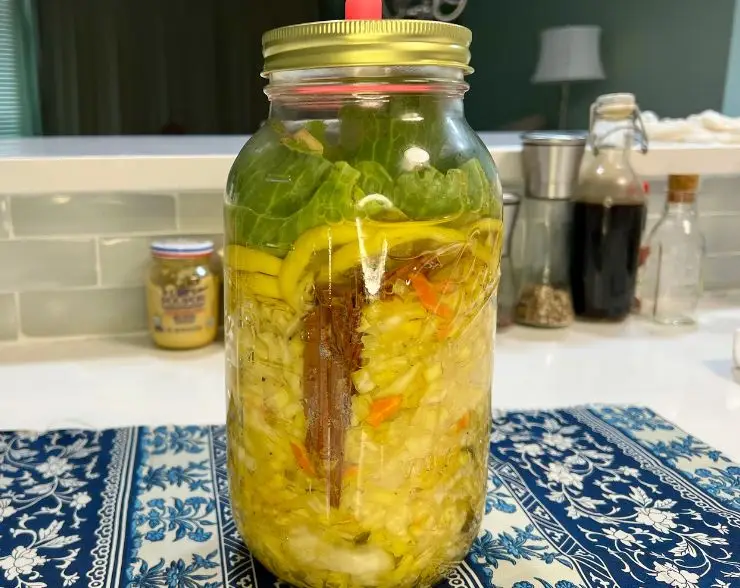
Probiotic Fermented Cabbage with Fruit & Turmeric

This slow-fermented cabbage is layered with pineapple, apple, fresh ginger, turmeric, Ceylon cinnamon, and lemon. Over time, it develops a deep, tangy flavor and natural probiotic richness. It’s a whole-food ferment meant to be eaten regularly, not just as a garnish.
Equipment
- fermentation kit a great kit if you are new to fermenting
Ingredients
- 1 medium head green cabbage (about 2–2½ pounds)
- Redmond Real Salt (see instructions for amount) Or a salt that is free from any additives
- Pineapple core from 1 fresh pineapple, finely choppedor ¼ of a fresh pineapple, finely chopped
- 1 medium apple, grated
- 1 (3-inch) piece fresh ginger, grated
- 1-2 tsp fresh turmeric, grated(or ½ teaspoon dried turmeric)
- ¼-½ Ceylon cinnamon stick
- 1 whole lemon, thinly sliced, seeds removed
- Freshly ground black pepper
Instructions
1. Prepare the Cabbage
Remove and reserve 2 clean outer cabbage leaves. You’ll use these later as a natural barrier.Quarter the cabbage through the core. Remove the core from each quarter, then slice into ribbons about ⅛ to ¼ inch thick — similar to thin coleslaw.Place the sliced cabbage into a large bowl.2. Weigh and Salt
Weigh the sliced cabbage.Add 2% Redmond Real Salt by weight.(Multiply cabbage weight in grams by 0.02.)Example:897 g × 0.02 = 18 g salt.If you do not have a scale, use about 2 tablespoons Redmond Real Salt per medium head of cabbage.If using a different salt, make sure it is clean and free from additives such as iodine or anti-caking agents. Fermentation depends on pure salt.3. Sweat the Cabbage
Massage the salted cabbage firmly for 2–3 minutes. It will begin to soften.Let it rest for about 15 minutes.Massage or pound again. Let it rest again.You may repeat this process up to 3 or 4 times. Each round releases more liquid.The cabbage is ready when:It feels soft and pliableA visible pool of liquid collects in the bowlWhen squeezed, it easily releases brineIf you have a kraut pounder, you can use it during this process to help draw out the liquid.Take your time here. Proper brine formation is what allows safe fermentation.4. Add the Fresh Ingredients
Using a box grater, grate the apple, ginger, and turmeric directly into the cabbage.Add the chopped pineapple and freshly ground black pepper.The black pepper supports absorption of turmeric and rounds out the flavor.Mix thoroughly so everything is evenly distributed.5. Pack the Jar
Add the cabbage mixture to a clean glass jar in stages.Add a few inches. Press down firmly.Add more. Press again.Continue until the jar is filled.As you press, brine should rise above the vegetables. There should be no air pockets.6. Add Cinnamon and Lemon
Slide the cinnamon stick down along the inside edge of the jar so it is fully submerged.Lay the lemon slices across the surface. Press gently so they sit under the brine.Nothing should be exposed above the liquid.7. Add the Cabbage Leaf Barrier
Place one of the reserved outer leaves over the surface of the cabbage.Trim if needed so it fits snugly inside the jar.Press it down to hold all smaller pieces underneath the brine.Add a fermentation weight if you have one.Everything must remain fully submerged.8. If Brine Is Low
If the cabbage did not produce enough liquid to fully cover everything:Dissolve ½ teaspoon salt in 1 cup filtered water.Add only enough of this brine to ensure everything is completely submerged.9. Cover and Ferment
Cover the jar with:A fermentation lidA loose lid (burp daily)Or a clean cloth or coffee filter secured with a bandPlace at room temperature, away from direct sunlight.Ferment for at least 14 days and up to 1 month.The flavor will deepen and become more complex over time.Taste after two weeks. Remove lemon slices if bitterness develops. Cinnamon may remain.10. Refrigerate
Once the flavor is pleasantly tangy and balanced, move to the refrigerator.Cold storage slows fermentation and preserves texture and probiotic activity.
Storage
- Once fermentation has reached your desired flavor, transfer the jar to the refrigerator.Properly fermented cabbage, kept fully submerged under brine, will keep for 3 to 6 months in cold storage.Flavor will continue to slowly develop over time.Always use clean utensils when serving.If any vegetables rise above the brine, press them back down to maintain quality.
Suggested Daily Serving
Tried this recipe?Let us know how it was!