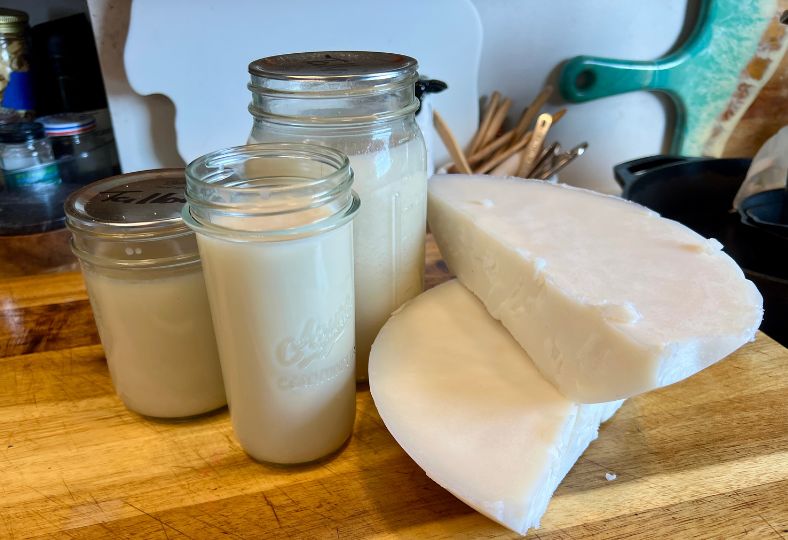
How to Render Beef Tallow in the Oven

Learn how to render beef tallow in the oven with this simple low-and-slow method. Using just beef fat and a little water, you’ll create clean, flavorful tallow that’s perfect for cooking, frying, cast iron care, skincare, and more. This beginner-friendly guide walks you through every step, from trimming and rendering the fat to straining and storing your finished tallow.
Ingredients
- 5 pounds beef fat (suet or beef fat trimmings), trimmed and cut into ½-inch pieces
- 2-3 tbsp water
Instructions
- Preheat oven to 225–235°F.Trim away any meat, blood spots, or connective tissue from the beef fat.Cut the fat into small pieces, about ½ inch or smaller. For best results, pulse the fat in a food processor or run it through a meat grinder. Smaller pieces render more efficiently and produce a better yield.Place the fat in a heavy Dutch oven or oven-safe pot.Add 2–3 tablespoons water. The water helps prevent the fat from sticking or scorching before enough fat has rendered to coat the bottom of the pot. The water will evaporate during the rendering process.Leave the pot uncovered and place it in the oven.Render for 2–4 hours, stirring every 30–45 minutes.As the fat renders, liquid tallow will collect in the bottom of the pot and the pieces of fat will gradually shrink. The bubbling will slow as moisture cooks away.The tallow is ready when most of the fat has melted, the cracklings are light golden, and bubbling has mostly stopped.Carefully strain the liquid tallow through a fine mesh strainer lined with a flour sack towel or cheesecloth into a large bowl.Allow the tallow to sit undisturbed for 1–2 hours. This allows the tallow to fully drain through the cloth while any remaining particles settle out.Discard the flour sack towel or cheesecloth and any solids remaining in the strainer.Cover the bowl loosely with a clean flour sack towel and place it in the refrigerator overnight.The next day, remove the solid tallow from the bowl.Inspect the bottom of the bowl for any water. If water is present, discard it.Inspect the bottom of the tallow for any settlement or impurities and scrape them away.Place the cleaned tallow in a pot over low heat and gently melt until liquid.If water was present in the bowl, continue heating gently until any remaining moisture has evaporated. A small amount of bubbling may occur as the last traces of water cook away.Pour the melted tallow into clean, dry jars.Allow the jars to cool completely.Seal the jars tightly or use a mason jar vacuum sealer for the longest shelf life.Store in a cool, dark place.
Notes
- For the highest-quality tallow, start with high-quality beef fat. Look for fat from grass-fed and finished, pasture-raised cattle raised without added growth hormones or antibiotics whenever possible. The quality of the fat directly impacts the flavor, color, and quality of the finished tallow.Suet, the fat surrounding the kidneys, is often considered the best fat for rendering tallow because it produces a cleaner, firmer, and milder finished product.A food processor or meat grinder is highly recommended. Smaller pieces render more efficiently, reduce rendering time, and increase yield.Low and slow is the key to rendering clean tallow. Resist the temptation to increase the oven temperature to speed up the process.Rendering time will vary depending on the amount of fat, the size of the pieces, and your oven. While most batches finish in 2–4 hours, larger batches or lower oven temperatures may take up to 6 hours.Do not judge doneness by time alone. The tallow is ready when most of the fat has rendered, the cracklings are light golden, and bubbling has mostly stopped.The overnight refrigeration step is used to check for any remaining moisture or impurities before long-term storage. Removing moisture helps extend shelf life.If water is present in the bottom of the bowl after refrigeration, gently reheat the tallow until any remaining moisture has evaporated before jarring.Properly rendered tallow can range in color from bright white to light cream depending on the source of the fat and the rendering process.For the longest shelf life, store tallow in clean jars and vacuum seal them with a mason jar vacuum sealer whenever possible.Tallow can be used for cooking, frying, cast iron care, conditioning wooden cutting boards, and homemade skincare products.
- Darker tallow is not necessarily bad tallow. If the tallow was rendered a little longer, it may have a darker color and richer aroma while still being perfectly usable for cooking, frying, and cast iron care.
Tried this recipe?Let us know how it was!